Listen to the full episode of the Rooted Sport Psychology Show for more insights and expert advice from Georgia Miller.
Introduction: The Unsung Heroes of Sports
When we think about the high-pressure world of collegiate and professional football, our minds often go to the athletes and coaches. But there’s a group whose performance is just as critical—yet rarely celebrated: the referees. In the latest episode of the Rooted Sport Psychology Show, host Georgia Miller shines a spotlight on the mental challenges and essential traits of sports officials. Drawing from her extensive experience working with referees across multiple sports, Georgia offers a deep dive into the unique pressures officials face and the mental skills that set the best apart.
This blog post unpacks the main themes and actionable tips from the episode, providing referees, coaches, and sports enthusiasts with a comprehensive guide to understanding and improving the mental side of officiating.
The Demanding Life of a Referee
Before delving into mental strategies, it’s crucial to appreciate the context in which referees operate:
- Dual Careers: Most referees juggle full-time jobs alongside their officiating duties. Unless retired, they must balance demanding work schedules with weekly game assignments.
- Travel Challenges: Unlike players and coaches who may travel by charter, referees typically fly commercial, often arriving a day early to avoid disruptions.
- Constant Evaluation: Referees undergo rigorous preparation—attending meetings, reviewing game film, and participating in scrimmages. Their performance is graded by a “grader,” adding another layer of scrutiny.
Key Insight: Refereeing is essentially a full-time commitment disguised as a part-time role, requiring immense dedication and mental fortitude.
The Three Core Mental Challenges for Referees
Georgia Miller identifies three primary mental hurdles that can undermine an official’s performance. Let’s break down each challenge and explore actionable strategies to overcome them.
1. Hesitation and Indecisiveness
The Challenge:
Sports move at lightning speed. Referees must make split-second decisions, but hesitation or second-guessing can lead to missed or delayed calls. This often stems from internal doubts—“Did I see that right?” or “Should I call this?”
Why It Matters:
- Hesitation disrupts the flow of the game.
- Indecisiveness erodes confidence, both for the referee and those relying on their judgment.
Actionable Advice:
- Trust Your Training: Rely on your preparation and instincts. If you see a violation, act decisively.
- Commit to the Call: Once you make a decision, stand by it. Overthinking in the moment is a recipe for error.
- Practice Decision-Making Drills: In training, simulate high-pressure scenarios to build confidence in your split-second judgments.
Expert Insight: Georgia emphasizes that the best referees “trust their eyes and instincts.” Overthinking is the enemy of effective officiating.
2. Worrying About What Others Think
The Challenge: Referees operate under the gaze of thousands—fans, coaches, players, and media. The fear of criticism or backlash can distract officials from their primary responsibility: ensuring a fair and safe game.
Why It Matters:
- External opinions can cloud judgment and feed into hesitation.
- Attempting to please everyone is impossible and adds unnecessary pressure.
Actionable Advice:
- Tune Out the Noise: Develop mental routines to block out external distractions. Focus on the game, not the crowd.
- Reframe Criticism: Accept that controversy is part of the job. Use feedback constructively, but don’t let it dictate your actions.
- Mindfulness Techniques: Practice mindfulness or meditation to stay present and centered during games.
Expert Insight: Georgia notes, “The best officials embrace the controversy that comes with their job. They stand firm in their decisions and focus on what they can control.”
3. Not Letting Go of Mistakes
The Challenge: Mistakes are inevitable, but dwelling on them can lead to tension, frustration, and a decline in performance for the remainder of the game.
Why It Matters:
- Holding onto errors distracts from the present moment.
- It can negatively impact the entire officiating crew and the flow of the game.
Actionable Advice:
- Develop a Reset Routine: After a mistake, use a physical or mental cue (e.g., deep breath, mantra) to reset and refocus.
- Stay Present: Concentrate on the next play, not the last one. The game moves forward—so should you.
- Self-Compassion: Remind yourself that perfection is unattainable. Learn from mistakes, but don’t let them define you.
Expert Insight:
Georgia advises, “Instead of focusing on avoiding mistakes, referees need to stay present and move on quickly.”
Positive Habits and Traits of Successful Referees
Despite the challenges, top referees cultivate habits and mindsets that help them thrive under pressure. Here are the key traits discussed in the episode:
Pre-Game Routines
Why They Matter: Routines help officials get into the right mental space, manage nerves, and build confidence.
Examples of Effective Routines:
- Visualization: Mentally rehearse the game, key scenarios, and successful calls.
- Music: Listen to calming or energizing music, depending on what helps you focus.
- Field Walks: Take a walk on the field to acclimate and visualize your positioning.
- Engagement: Build rapport with coaches and players to ease tension and foster respect.
Actionable Tip: Experiment with different routines to find what best prepares you mentally and physically for game time.
Mental Resilience
Key Qualities:
- Ownership: Take responsibility for your calls, good or bad.
- Selective Attention: Focus on what you can control—the next call, the next play.
- Emotional Regulation: Use techniques like deep breathing or positive self-talk to manage stress.
Actionable Tip: Regularly reflect on your mental performance and seek feedback from trusted colleagues or mentors.
Conclusion: Appreciating the Referee’s Role
Referees are performers in their own right, facing immense pressure and scrutiny with every game. By understanding the unique mental challenges they encounter—and the strategies they use to overcome them—we can foster greater respect and appreciation for their essential role in sports.
Listen to the full episode of the Rooted Sports Psychology Show here.
Tennis is often described as a game of inches, but those inches are as much mental as they are physical. In a recent episode of the Rooted Sports Psychology Show, host Georgia Miller and guest expert Austin Davids—an accomplished player and coach—delve deep into the psychological and technical nuances that define tennis performance. Their conversation offers a treasure trove of actionable advice for players, coaches, and parents seeking to build resilience, foster sportsmanship, and thrive under the unique pressures of the sport.
Below, we break down the episode’s most valuable insights, providing in-depth guidance and expert recommendations to help you elevate your tennis game from the inside out.
The Power of Tennis Community and Family
Key Insight: Tennis is more than a solo pursuit; it’s a community and, for many, a family tradition.
Austin’s Story:
Growing up in a tennis family in Topeka, Kansas, Austin Davids was immersed in the sport from age five. His father coached high school tennis, and his brother followed suit. This environment fostered not just skill, but a deep appreciation for the camaraderie and support that tennis communities offer.
Actionable Advice:
- Seek out tennis communities: Whether through clubs, school teams, or local leagues, surround yourself with people who share your passion.
- Value mentorship: Learn from coaches, older players, and family members who can offer guidance and encouragement.
- Give back: As you grow, look for ways to mentor younger players and contribute to the tennis ecosystem.
Singles vs. Doubles: Navigating the Mental Divide
Key Insight:
The mental game shifts dramatically between singles and doubles play.
Expert Breakdown:
- Doubles:
- Players often perform better due to shared pressure and mutual support.
- Communication and encouragement between points are vital.
- Rituals like “meet at the T” (partners meeting at the center of the court after each point) foster connection and help reset mentally.
- Singles:
- Players are more prone to internalizing mistakes and negative thoughts.
- The absence of a partner means self-talk and self-regulation become crucial.
Actionable Advice:
- For Doubles Players:
- Establish a between-points routine (e.g., “meet at the T”) to maintain connection and positivity.
- Use encouraging language, even after lost points.
- For Singles Players:
- Develop self-talk scripts to counteract negative thoughts.
- Practice quick mental resets to avoid dwelling on mistakes.
Routines and Mental Resets: Your Secret Weapon
Key Insight: Consistent routines between points are essential for managing pressure and maintaining focus.
Expert Recommendations:
- Serving Routine: Austin’s example: Bounce the ball three times, take a deep breath, then serve. This anchors the mind and body, especially under stress.
- Physical Reset: Georgia’s example: Walk to the back fence and touch it between points to clear the mind.
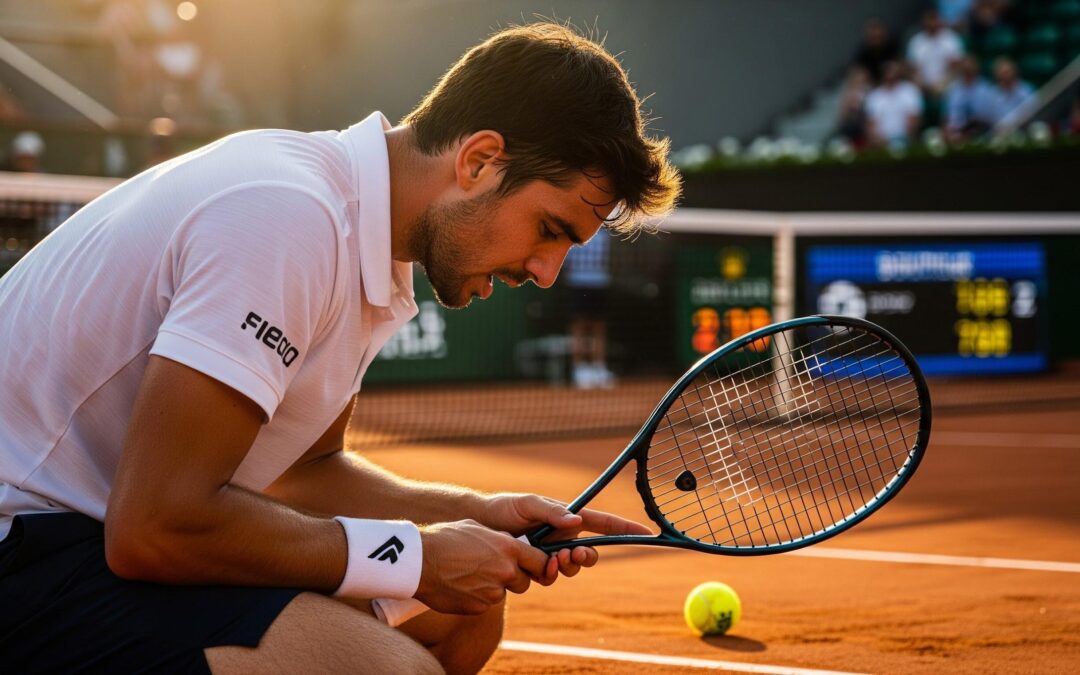
- Equipment Adjustment: Straightening racquet strings between points can serve as a tactile, controllable action to shift focus away from frustration.
Actionable Advice:
- Create a personalized routine: Experiment with different actions (breathing, bouncing, walking) to find what calms and centers you.
- Practice your routine in training: Make it automatic so it’s reliable under pressure.
- Use equipment as a reset tool: Adjust your strings, towel off, or re-grip your racquet to signal a mental reset.
Understanding Tennis Scoring and Embracing Failure
Key Insight:
Tennis scoring is unique—every point is equally important, and losing is inevitable, even for the best.
Expert Insights:
- Statistical Reality: Even Roger Federer won just over half his career points. Losing points is part of the game, not a sign of failure.
- No Game Clock: Players are never truly out of a match, which demands constant mental engagement and resilience.
Actionable Advice:
- Normalize losing: Accept that you will lose points and games. Focus on the next point, not the last mistake.
- Develop bounce-back strategies: Use routines and positive self-talk to reset after setbacks.
- Stay present: Avoid projecting ahead or dwelling on the past—play one point at a time.
Coaching Presence: Supporting Players During Matches
Key Insight: Coaches play a pivotal role during changeovers and critical moments, but their presence is often limited.
Expert Recommendations:
- Maximize changeovers: Use these moments to provide strategic advice, encouragement, and confidence boosts.
- Offer an outside perspective: Help players see tactical adjustments they might miss in the heat of play.
- Remind players of the big picture: Losing a few points or games doesn’t end the match—focus on finishing strong.
Actionable Advice for Coaches:
- Be proactive: Don’t wait for players to ask for help—offer support when you see them struggling.
- Foster independence: Teach players to self-assess and problem-solve, preparing them for matches where coaching isn’t allowed.
Self-Advocacy and Mental Autonomy on Court
Key Insight: Tennis players must learn to self-coach and adapt without constant external input.
Expert Strategies:
- Reflective Questions: Encourage players to ask themselves:
- What’s working?
- What needs adjustment?
- How can I respond if my opponent changes tactics?
- Mental Autonomy: Cultivate the ability to recognize situations and make decisions independently.
Actionable Advice:
- Practice self-assessment: After each match or practice, review what went well and what could improve.
- Role-play scenarios: Simulate matches without coaching to build self-reliance.
Managing Rankings and Pressure: The UTR Dilemma
Key Insight:
The Universal Tennis Rating (UTR) system can create unhealthy pressure and distract from performance.
Expert Insights:
- Ranking Anxiety: Players often fixate on their own and opponents’ UTR, leading to stress and fear of upsets.
- Participation Impact: The focus on UTR points has led some players to skip high school tennis, missing out on valuable team experiences.
Actionable Advice:
- Avoid bracket obsession: Don’t look at seedings or rankings before matches—focus on your own game.
- Play for the process, not the number: Concentrate on effort and improvement, not just outcomes.
- Advocate for high school tennis: Encourage participation for the camaraderie and growth it offers, regardless of UTR implications.
Sportsmanship and Self-Officiating: Building Integrity
Key Insight: With limited officiating at many levels, players must uphold honesty and sportsmanship.
Expert Recommendations:
- Set clear expectations: Coaches should communicate a zero-tolerance policy for cheating to players and parents.
- Handle disputes calmly: If you disagree with a call, ask “Are you sure?” and involve a coach or official if needed.
- Be the bigger person: Respond to anger or unfairness with composure, not escalation.
Actionable Advice:
- Control what you can: Focus on your own calls and effort, not your opponent’s behavior.
- Model integrity: Make honest calls, even if it costs you a point.
- Educate parents: Involve them in preseason meetings to reinforce the culture of sportsmanship.
Final Takeaways: Effort, Process, and Growth
Key Insight: Effort and process matter more than outcome. Give what you can, every time.
Expert Wisdom:
- Austin’s Quote: “It’s impossible to give everything but give what you can.”
- Georgia’s Emphasis: Lead with your process and let the outcomes follow.
Listen to the full episode of the Rooted Sport Psychology Show with Georgia Miller here.
Club sports have become a defining feature of youth athletics, offering athletes opportunities that extend far beyond the traditional school season. In a recent episode of the Rooted Sport Psychology Show, host Georgia Miller—an experienced club athlete, coach, and recruiter—unpacks the nuanced landscape of club sports. Drawing from her extensive background, Georgia provides a comprehensive look at both the advantages and challenges of club sports, and offers actionable advice for athletes and families navigating this demanding yet rewarding world.
Below, we break down the main themes and expert tips from the episode, providing in-depth guidance for anyone considering or currently involved in club sports.
The Major Benefits of Club Sports
1. Year-Round Play: Immersion for the Passionate Athlete
Key Insights:
- Club sports often extend the playing season from the typical three months to eight or even eleven months when combined with school sports.
- This is ideal for athletes who are deeply passionate about their sport and want to maximize their time on the field or court.
Actionable Advice:
- Assess Your Motivation: Before committing, ensure the athlete’s desire for year-round play is intrinsic, not driven by external pressure.
- Family Support: Consider whether your family can realistically support the time and travel demands.
- Balance: Even with extended seasons, schedule intentional breaks to prevent burnout (more on this below).
2. Elevated Competition: Sharpening Skills Against the Best
Key Insights:
- Club teams attract highly skilled athletes, raising the level of play and intensity.
- Competing against top talent accelerates development and exposes athletes to new challenges.
Actionable Advice:
- Seek the Right Fit: Not all club teams are created equal. Research programs to find one that matches your skill level and goals.
- Embrace Challenges: Use tougher competition as motivation to improve, not as a source of discouragement.
- Growth Mindset: View setbacks as opportunities to learn and grow.
3. Travel Opportunities: Broadening Horizons and Building Bonds
Key Insights:
- Club sports often involve travel to tournaments in different cities or states.
- These trips can be memorable family experiences, offering time to explore new places and bond outside of the sport.
Actionable Advice:
- Make the Most of Travel: Plan to enjoy local attractions and restaurants as a family.
- Balance School and Sports: Stay organized to manage missed school days and keep up with academics.
- Cherish the Experience: Use travel as a chance to create lasting memories, not just as a means to an end.
4. Diverse Coaching and Skill Development
Key Insights:
- Exposure to multiple coaches and playing styles broadens an athlete’s skill set.
- Learning to adapt to different coaching personalities is a valuable life skill.
Actionable Advice:
- Be Open-Minded: Embrace feedback from various coaches, even if their styles differ.
- Develop Adaptability: Use the diversity of coaching as preparation for future challenges in sports and life.
- Reflect on Growth: Regularly assess what you’re learning from each coach and how it contributes to your overall development.
5. Increased Exposure for College Recruitment
Key Insights:
- Club tournaments are often prime recruiting grounds for college coaches, especially since school seasons overlap with college schedules.
- Well-known clubs may attract proactive interest from recruiters.
Actionable Advice:
- Be Proactive: Don’t rely solely on club exposure—reach out to college coaches and create highlight reels.
- Understand the Process: Recognize that club sports are not the only path to college athletics; school sports and showcases also play a role.
- Stay Grounded: Focus on enjoying the sport, not just on recruitment outcomes.
The Challenges and Pitfalls of Club Sports
1. Time Commitment: Sacrifices and Trade-Offs
Key Insights:
- Club sports demand significant time, often requiring weekend travel and long hours.
- Athletes may miss out on typical high school experiences and family events.
Actionable Advice:
- Set Priorities: Discuss as a family what you’re willing to sacrifice and what’s non-negotiable.
- Schedule Downtime: Protect time for rest, social activities, and family events.
- Monitor Well-Being: Watch for signs of stress or resentment related to missed experiences.
2. Athletic Identity: The Double-Edged Sword
Key Insights:
- Intense involvement can lead to a strong athletic identity, making it hard for athletes to see themselves outside their sport.
- This can limit opportunities for jobs, internships, and other interests.
Actionable Advice:
- Encourage Balance: Support involvement in non-sport activities, even if only during the off-season.
- Foster Self-Reflection: Help athletes explore interests and strengths beyond athletics.
- Plan for the Future: Discuss long-term goals that include, but are not limited to, sports.
3. Financial Cost: A Significant Barrier
Key Insights:
- Club sports can be expensive, with costs for registration, travel, gear, and tournaments.
- Financial strain can impact the entire family.
Actionable Advice:
- Budget Carefully: Assess all costs upfront and plan accordingly.
- Seek Scholarships: Some clubs offer financial aid or scholarships—don’t hesitate to ask.
- Weigh the Value: Consider whether the investment aligns with the athlete’s goals and family priorities.
4. Burnout and Overuse Injuries: The Hidden Dangers
Key Insights:
- High intensity and frequency of play increase the risk of both mental and physical burnout.
- Overuse injuries are common due to insufficient rest.
Actionable Advice:
- Prioritize Rest: Schedule regular rest days and take advantage of natural breaks (e.g., December between seasons).
- Monitor Health: Pay attention to signs of fatigue, injury, or declining motivation.
- Encourage Variety: Cross-train or play multiple sports to reduce repetitive strain.
5. Early Specialization: Risks to Development and Enjoyment
Key Insights:
- Many athletes specialize in one sport as early as age eight, limiting overall development and increasing burnout risk.
- Early specialization can stifle enjoyment and creativity.
Actionable Advice:
- Delay Specialization: Encourage participation in multiple sports until at least late middle school or high school.
- Promote Unstructured Play: Make time for free play and non-competitive activities.
- Value Fun and Learning: Remind athletes (and parents) that childhood should be about exploration, not just achievement.
6. Pressure and Stress: Navigating Expectations
Key Insights:
- Athletes face pressure from competition, coaches, teammates, and parents.
- Parental involvement can sometimes add to the stress, especially if overly critical or vocal.
Actionable Advice:
- Develop Coping Skills: Teach athletes to handle criticism constructively and focus on solutions.
- Empower Ownership: Encourage athletes to advocate for themselves (e.g., asking coaches about playing time).
- Support, Don’t Solve: Parents should guide athletes in problem-solving rather than intervening directly.
Expert Strategies for Thriving in Club Sports
1. Stay Grounded in Values
- Keep the athlete’s well-being and desires at the center of all decisions.
- Remember: It’s the athlete’s journey, not the parents’ or coaches’.
2. Cultivate Gratitude and Perspective
- Focus on what you have, not what you lack.
- Recognize that being a star or playing year-round isn’t the only path to success or happiness.
3. Foster Solution-Oriented Mindsets
- Don’t dwell on mistakes or perceived injustices.
- Ask: “What’s my plan? How can I move forward?”
4. Recognize the Role of Coaches
- Appreciate the dedication of most coaches, even if you encounter a few bad ones.
- Control your response to coaching decisions and focus on personal growth.
5. Balance is Key
- Make time for family, friends, and non-sport activities.
- Take breaks to recharge and avoid burnout.
Final Thoughts: Club Sports as a Tool for Growth
Club sports can be a powerful vehicle for athletic and personal development, but only when approached with intention and balance. By understanding both the opportunities and challenges, athletes and families can make informed decisions that prioritize well-being, growth, and enjoyment.
Listen to the full episode of the Rooted Sports Psychology Show with Dr. Bramante and Georgia Miller here.
Imposter syndrome and self-defeating behaviors are silent adversities for athletes and performing artists. In a recent episode of the Rooted Sport Psychology Show, host Georgia Miller and guest Dr. Albert Bramante—a college professor and expert in performance psychology—delved deep into the roots of these challenges and offered actionable strategies to overcome them. This blog post unpacks their expert insights, providing a comprehensive guide for anyone striving to reach their full potential in high-pressure performance environments.
Understanding Imposter Syndrome in Performance
Imposter syndrome is the persistent feeling of being a fraud, despite clear evidence of competence and achievement. Both athletes and artists experience this phenomenon, often dismissing their successes and fearing exposure as “not good enough.” Dr. Bramante’s decades of experience reveal that these feelings are not only common but also deeply rooted in our psychology.
Key Manifestations:
- Self-doubt despite evidence: Athletes in starting positions or actors landing roles may still feel undeserving.
- Fear of being “found out”: Persistent anxiety that others will discover their perceived inadequacy.
- Dismissal of achievements: Tendency to forget or minimize past successes.
Expert Insight:
Imposter syndrome is not a reflection of actual ability but a distortion of self-perception. Recognizing this is the first step toward overcoming it.
The Dual Nature of Fear: Failure and Success
Dr. Bramante highlights that fear is a double-edged sword in performance:
1. Fear of Failure
- Origins: Rooted in our evolutionary need for survival, fear once protected us from physical threats.
- Modern Context: In auditions or competitions, this fear can become overactive, leading to anxiety, avoidance, or self-sabotage.
- Impact: Repeated rejection or criticism can erode confidence and reinforce self-doubt.
2. Fear of Success
- Less Obvious, Equally Powerful: Success brings change—new expectations, environments, and identities.
- Resistance to Change: Even positive change disrupts familiar patterns, causing discomfort and unconscious self-sabotage.
Actionable Advice:
- Acknowledge both fears: Understand that fear of success can be as limiting as fear of failure.
- Reflect on your reactions: Are you avoiding opportunities or downplaying achievements? This may signal a fear of success.
Mindset: The Foundation of Performance
Dr. Bramante and Georgia Miller agree: mindset is as critical as physical or technical skill. Here’s how to optimize your mental game:
1. Self-Awareness and Honest Reflection
- Examine your role: Gently consider how your thoughts and behaviors contribute to challenges.
- Challenge limiting labels: Avoid internalizing identities like “starving artist” or “average athlete.”
- Seek external perspective: Trusted coaches, mentors, or peers can help you see your strengths objectively.
2. Reframing Failure as Feedback
- Growth Mindset: View setbacks as learning opportunities, not as evidence of inadequacy.
- Historical Example: Inventors and elite performers often fail repeatedly before succeeding—each failure is a step closer to mastery.
- Practical Routine: After performances, reflect on what went well and what can be improved, rather than ruminating on mistakes.
3. Language and Self-Talk
- Positive Affirmations: Focus on what you want to achieve (“I will do my best”) rather than what to avoid (“Don’t mess up”).
- Shift from fear to action: Move your self-talk from “What am I afraid of?” to “What do I want, and what am I going to do?”
The Power of Presence: Getting Out of Your Head
One of Dr. Bramante’s most powerful tips is to “get outside your own head.” Overthinking can disconnect you from the present moment, whether you’re on stage or on the field.
How to Practice Presence:
- Active Listening: For actors, truly listen to your scene partner. For athletes, stay attuned to the flow of the game.
- Mindful Engagement: Focus on the current play or moment, not the next move or past mistake.
- Routine Reflection: After performances, allow a short cooldown period (10–20 minutes) to process emotions, then move forward.
Visualization: Mental Rehearsal for Success
Visualization is a scientifically backed tool that primes your mind for peak performance.
How to Use Visualization Effectively:
- Detailed Scenarios: Imagine not just the outcome, but the process—how smoothly you execute each step.
- Sensory Immersion: Picture the environment, sounds, sights, and even what you’re wearing.
- Regular Practice: Incorporate visualization into daily routines, both in training and before high-stakes events.
Research Insight:
Studies show that athletes who combine physical practice with visualization outperform those who rely on physical training alone.
Managing Feedback and Negativity Bias
Our brains are wired to focus on negative feedback—a phenomenon known as negativity bias. This can undermine confidence and fuel imposter syndrome.
Strategies to Counteract Negativity Bias:
- Conscious Focus on Positives: Keep a record of compliments, achievements, and positive feedback.
- Objective Evaluation: Separate the content of criticism from its delivery; extract useful information without internalizing negativity.
- Support System: Lean on coaches, mentors, and peers to help you recognize your strengths.
Balancing Internal and External Realities
Success in performance is influenced by factors both within and beyond your control.
Maintain Perspective:
- Control the Controllables: Focus on preparation, effort, and attitude.
- Accept External Factors: Recognize that casting decisions, competition, and other variables are not always reflections of your ability.
- Redefine Success: Success isn’t just about external recognition; it’s about growth, learning, and doing what you love.
The Role of Technology and AI in Performance
Dr. Bramante notes that AI can be a valuable tool for generating affirmations, quotes, and research, but warns against overreliance.
Best Practices for Using AI:
- Augment, Don’t Replace: Use AI to spark ideas or automate tasks, but ensure your authentic voice shines through.
- Avoid Isolation: Technology should support, not replace, real human connection and self-reflection.
Actionable Takeaways for Performers
- Acknowledge and Name Your Fears: Both fear of failure and fear of success can hold you back.
- Cultivate Self-Awareness: Regularly reflect on your mindset, language, and behaviors.
- Practice Presence: Stay engaged in the moment to optimize performance.
- Leverage Visualization: Use detailed mental rehearsal to prepare for success.
- Reframe Failure: Treat setbacks as feedback, not defeat.
- Focus on the Positive: Counteract negativity bias by consciously celebrating your wins.
- Balance Perspective: Recognize what you can control and accept what you can’t.
- Use Technology Wisely: Let AI support your growth, but keep your unique voice at the center.
Final Words of Encouragement
As Dr. Bramante reminds us: “You are enough. You have all the wisdom and tools within you to succeed. Sometimes it just takes a coach or someone else to help you recognize and tap into those resources.”
Listen to the full episode of the Rooted Sport Psychology Show here.
Introduction: Faith, Athletics, and the Parable of the Talents
In the latest episode of the Rooted Sport Psychology Show, host Georgia Miller explores a profound intersection between faith and sports by unpacking the Parable of the Talents from Matthew 25. This biblical story isn’t just about money—it’s about how we use the unique gifts and abilities entrusted to us. For Christian athletes, this parable offers a powerful framework for approaching competition, adversity, and personal growth.
This blog post dives deep into the episode’s main theme: using your God-given talents to their fullest, overcoming fear of failure, and playing with courage. We’ll break down each actionable tips discussed, provide practical examples, and offer expert advice to help you integrate your faith with your athletic journey.
1. Recognize Your Talents as Gifts to Be Invested, Not Hidden
The Parable’s Lesson for Athletes
- Biblical Context: In Matthew 25, three servants are entrusted with “talents” (a form of money). Two invest and multiply what they’re given; the third, out of fear, hides his talent and is reprimanded.
- Athletic Application: Your “talents” are your unique skills—speed, leadership, encouragement, technical ability, or even humor. These are meant to be developed and shared, not buried due to fear or self-doubt.
Actionable Advice
- Inventory Your Gifts: Take time to honestly assess your strengths. Are you a motivator? A strategist? A technical player? Write them down.
- Ask for Feedback: Sometimes, teammates and coaches see gifts in you that you overlook. Ask them what they value most about your contribution.
- Set Growth Goals: For each talent, set a specific goal to develop it further. For example, if you’re a strong communicator, aim to lead a team huddle or encourage a struggling teammate each week.
Expert Insight
“God doesn’t want you to play it safe. He gave you these talents for a reason, and He wants you to multiply them.”
— George, Rooted Sport Psychology Show
2. Overcome the Fear of Failure: Play to Win, Not Just to Avoid Losing
The Trap of Playing It Safe
- Fear-Based Performance: Many athletes play “not to lose” rather than “to win.” This mindset leads to conservative choices, missed opportunities, and stunted growth.
- Parable Parallel: The servant who hid his talent was motivated by fear. He missed the chance to grow and was ultimately reprimanded for his inaction.
Actionable Advice
- Reframe Mistakes: View errors as essential steps in your development, not as evidence of inadequacy.
- Take Calculated Risks: Challenge yourself to try new moves, take on leadership roles, or speak up in team meetings—even if it feels uncomfortable.
- Reflect and Adjust: After each game or practice, review what risks you took and what you learned, rather than just focusing on outcomes.
Practical Example
Georgia shared the story of a soccer player with excellent dribbling skills who was afraid to use them in games. With encouragement, she took the risk, dribbled forward, and made a significant impact. Her confidence grew as she saw the positive results of investing her talent.
Expert Insight
“You will make mistakes along the way—we all do. But just like the master in the parable praised the servants who took risks, you too will be praised for stepping out in faith and courage.”
— George
3. Embrace Your Unique Role—Even If It’s Not Flashy
Every Gift Matters
- Not All Talents Are Obvious: You might not be the top scorer or the fastest runner. Maybe your gift is encouragement, humor, or quiet leadership from the bench.
- Team Impact: Teams thrive when every member invests their unique strengths, not just the “star” players.
Actionable Advice
- Own Your Role: Whether you’re a starter or a substitute, find ways to contribute meaningfully. Your presence and attitude can shift team dynamics.
- Develop “Hidden” Skills: Leadership, resilience, and positivity are just as valuable as physical skills. Invest in these areas through reading, mentorship, or workshops.
- Celebrate Others: Recognize and affirm the gifts of your teammates. This builds a culture of mutual respect and growth.
Expert Insight
“God doesn’t give you more than you can handle, and over time, you’ll learn to love and embrace the role you play.”
— Georgia Miller, M.Ed., CMPC
4. Hand Over Your Fears and Stress to God
Integrating Faith and Mental Skills
- Spiritual Surrender: Anxiety, pressure, and fear are common in sports. The episode encourages athletes to pray about these struggles and trust God with the outcome.
- Mental Skills Training: Prayer can be a powerful tool for mental resilience, focus, and peace.
Actionable Advice
- Pray Specifically: Don’t just pray for wins—pray for courage, focus, and the ability to use your gifts fully.
- Practice Surrender: Before games or practices, take a moment to hand your worries to God. Visualize placing your fears in His hands.
- Combine Faith and Psychology: Use mental skills techniques (like visualization or breathing exercises) alongside prayer for a holistic approach.
Expert Insight
“Hand over your fears to God. When you do, good things will come.”
— Georgia Miller, M.Ed., CMPC
5. Practical Steps for Christian Athletes: Integrating Faith and Performance
What to Pray About
- Courage to Use Your Gifts: Ask for boldness to step out and invest your talents, even when it’s risky.
- Resilience in Adversity: Pray for strength to persevere through setbacks and failures.
- Humility and Gratitude: Thank God for your abilities and the opportunity to compete, regardless of the outcome.
- Impact Beyond the Field: Pray that your actions and attitude would positively influence teammates, coaches, and opponents.
Daily Habits
- Reflect on the Parable: Regularly revisit Matthew 25 and journal about how you’re investing your talents.
- Accountability: Find a teammate or mentor to discuss your progress and challenges.
- Celebrate Growth: Acknowledge and celebrate when you take risks, use your gifts, or overcome fear—even if the result isn’t perfect.
Conclusion: Compete with Courage, Invest Your Talents, and Glorify God
The Parable of the Talents challenges all athletes—especially those of faith—to move beyond fear, invest their gifts, and play with purpose. Whether your talent is obvious or hidden, flashy or quiet, you are called to use it fully. By integrating faith, mental skills, and a growth mindset, you can honor God, impact your team, and experience true fulfillment in sport.