Transitioning out of a sports career is one of the most significant—and often daunting—life changes an athlete can face. Whether you’re nearing the end of your athletic journey, have already retired, or are just beginning to consider what comes next, the uncertainty of life after sport can bring up anxiety, fear, and a host of difficult questions:
- Who am I without my sport?
- What will my daily life look like?
- How do I find purpose and direction beyond the field, court, or track?
In a recent episode of the Rooted Sport Psychology Show, I (Georgia Miller) addressed these very concerns, offering a roadmap for athletes to transition with confidence, purpose, and clarity. Drawing from my experience working with athletes at all levels, I’ve developed a six-step process to help you navigate this pivotal moment in your life. Below, I break down each step in detail, providing actionable advice, expert insights, and practical recommendations to guide you through this transition.
1. Acknowledge the Challenges of Life After Sport
Why This Matters:
Ignoring the emotional and practical challenges of retirement only amplifies anxiety. Facing them head-on is the first step toward a healthy transition.
Common Challenges:
- Loss of Identity: Many athletes define themselves by their sport. When that ends, it can feel like losing a part of yourself.
- Loss of Routine and Structure: Sports provide a built-in schedule. Without it, days can feel aimless.
- Missing Competition: The thrill of competition is hard to replicate elsewhere.
- Social Disconnection: Teams often become a second family; leaving can feel isolating.
Actionable Advice:
- Self-Reflection: Take time to write down which challenges resonate most with you. Naming your fears reduces their power.
- Normalize the Struggle: Understand that these feelings are common and do not mean you’re failing at transitioning.
- Plan Proactively: Just as you train for competition, prepare for this transition. Having a plan can actually enhance your current performance by reducing future anxiety.
Expert Insight:
Planning for life after sport doesn’t mean you’re less committed to your current career—it means you’re investing in your long-term well-being.
2. Identify Your Transferable Skills
Why This Matters:
Your athletic career has equipped you with a unique set of skills that are highly valued in the workplace and beyond.
Key Transferable Skills:
- Discipline and Work Ethic: Years of training and commitment.
- Leadership: Experience as a team captain or motivator.
- Resilience: Bouncing back from setbacks and injuries.
- Performance Under Pressure: Thriving in high-stakes situations.
- Teamwork and Communication: Collaborating with diverse personalities.
Actionable Advice:
- Inventory Your Skills: List out all the qualities and abilities you’ve developed through sport.
- Gather Evidence: Think of specific examples—times you led a team, overcame adversity, or solved problems under pressure.
- Reframe Your Experience: Remember, you’re not starting from scratch. You’re building on a strong foundation.
Expert Insight:
Employers and organizations value the mindset and habits athletes bring. Recognizing your own worth is the first step to communicating it to others.
3. Apply Your Skills to Real-Life Scenarios
Why This Matters:
Knowing your skills is one thing; learning to use them outside of sport is another.
How to Apply Your Skills:
- Job Interviews: Use stories from your athletic career to demonstrate leadership, resilience, and teamwork.
- Problem-Solving: Approach new challenges with the same strategic mindset you used in competition.
- Coping with Uncertainty: Trust your ability to adapt, just as you did when facing unexpected setbacks in sport.
Actionable Advice:
- Practice Scenarios: Role-play interviews or networking situations where you highlight your athletic skills.
- Reflect with Gratitude: Instead of focusing on loss, appreciate what sport has given you and how it prepares you for new challenges.
- Seek Feedback: Ask mentors or coaches how they see your strengths translating to other fields.
Expert Insight:
Transitioning is uncomfortable, but your adaptability as an athlete is your greatest asset. Trust in your ability to learn and grow.
4. Find Perspective and Recognize Your Support Systems
Why This Matters:
Perspective shifts and strong support networks are crucial for emotional resilience during transition.
How to Gain Perspective:
- Acknowledge Loss, Then Shift Focus: Allow yourself to grieve, but also ask, “What am I gaining?”—more time, new opportunities, deeper relationships.
- Stay Connected: Maintain relationships with teammates, coaches, and mentors. They can offer support and honest feedback.
- Build a New Team: Identify friends, family, or professionals who can be your support system.
Actionable Advice:
- Map Your Network: Write down who you can turn to for advice, encouragement, or just a listening ear.
- Communicate Openly: Don’t be afraid to ask for help. Vulnerability is a strength, not a weakness.
- Join Alumni or Athlete Transition Groups: These communities understand your experience and can offer guidance.
Expert Insight:
The strongest athletes are those who seek support. You don’t have to go through this alone—lean on your community.
5. Explore Career Options and Practice Patience
Why This Matters:
The pressure to have everything figured out immediately is unrealistic and counterproductive. Exploration is part of the process.
How to Explore:
- Try New Things: Take internships, volunteer, or shadow professionals in fields of interest.
- Assess Your Interests and Strengths: Use career assessments or workbooks to clarify what excites you.
- Accept Stepping Stones: Your first job after sport may not be your dream job, and that’s okay.
Actionable Advice:
- Set Small Goals: Focus on learning and growth rather than immediate success.
- Stay Curious: Approach new opportunities with an open mind.
- Be Patient: Give yourself grace as you navigate uncertainty. Remember, you didn’t have all the answers when you started your athletic career either.
Expert Insight:
Uncertainty is not failure. It’s a natural part of growth. Use this time to discover what truly motivates and fulfills you.
6. Establish New Routines for Physical and Mental Health
Why This Matters:
Athletes thrive on structure. Without it, both physical and mental health can suffer.
How to Build New Routines:
- Exercise: Find activities you enjoy—no more mandatory drills or exercises you hate.
- Nutrition: Adjust your eating habits to match your new activity level and health goals.
- Mental Health: Incorporate mindfulness, journaling, or therapy into your routine.
Actionable Advice:
- Audit Your Old Routines: Identify which habits served you well and which you’re ready to leave behind.
- Experiment: Try new forms of movement or wellness practices until you find what fits.
- Prioritize Consistency: Even a simple daily routine can provide stability and confidence.
Expert Insight:
You have the freedom to design routines that support your well-being. This is your chance to create a lifestyle that energizes and sustains you.
Final Thoughts: This Is a Beginning, Not an End
Your athletic career has prepared you for so much more than you realize. The lessons, skills, and resilience you’ve developed are the foundation for a fulfilling life beyond sport. This transition is not an ending—it’s a bridge to your next chapter.
If you’re seeking guidance, support, or practical tools to navigate this journey, I invite you to listen to the full episode and explore the new program available on my website. You can also reach out for a free consultation or access the workbook designed to help you through each step of this process.
You are more ready than you think.
Overthinking is one of the most common—and most disruptive—mental challenges athletes face. Whether you’re a basketball player worried about turnovers or a tennis player second-guessing your swing, overthinking can sabotage your performance by pulling your focus away from the present moment and flooding your mind with doubts and worries.
In this episode of the Rooted Sport Psychology Show, host Georgia Miller dives deep into why overthinking happens, how it shows up in real sports scenarios, and—most importantly—what you can do to break the cycle. Drawing on years of experience working with athletes, Georgia shares four practical, actionable strategies to help you simplify your mental game and perform at your best.
Below, we’ll break down each tip in detail, offering nuanced insights and expert advice to help you put these strategies into practice.
Why Do Athletes Overthink?
Before we get to the solutions, it’s important to understand the problem. Overthinking often stems from:
- Fear of mistakes: Worrying about messing up or letting others down.
- Outcome anxiety: Focusing on what might happen in the future rather than what’s happening now.
- Self-doubt: Second-guessing your technique, decisions, or abilities.
- External pressures: Concerns about coaches, parents, or spectators.
Real-life examples:
- A basketball player who just made a turnover starts obsessing over every detail—dribbling, hand position, coach’s reaction—rather than moving on to the next play.
- A tennis player who hits two balls out of bounds begins to overanalyze their form, footwork, and swing, overriding years of muscle memory.
The result? You lose sight of the game unfolding in front of you, and your natural instincts are replaced by a flood of distracting thoughts.
1. Be Adaptable: Focus on Solutions, Not Judgments
Key Insight:
Adaptability is about responding to challenges in the moment, not getting stuck in self-criticism or frustration.
Why it matters:
When you dwell on mistakes or unfair situations, you waste mental energy and lose your competitive edge. Adaptable athletes stay engaged, problem-solve, and keep moving forward.
How to practice adaptability:
- Shift from judgment to action:
- Instead of thinking, “I can’t believe I messed up,” ask, “What can I do right now to help my team?”
- Embrace the unexpected:
- If you’re double-teamed in basketball, don’t fixate on the pressure—look for passing lanes or opportunities to drive.
- If your first serve in tennis is off, don’t try to overhaul your technique mid-match. Use your second serve and adjust your tactics.
- Stay present:
- Focus on the next play, not the last mistake.
Expert tip:
Think of adaptability as a muscle. The more you practice responding to challenges with curiosity and flexibility, the stronger your mental game becomes.
2. Talk to Yourself Like a Great Coach
Key Insight:
Your inner voice can be your biggest ally—or your harshest critic. The way you talk to yourself shapes your confidence and focus.
Why it matters:
Negative self-talk (“I always mess up,” “I’m not good enough”) fuels anxiety and overthinking. Positive, assertive self-talk helps you reset and refocus.
How to coach yourself:
- Be specific and constructive:
- Instead of vague criticism, give yourself clear, actionable feedback. (“Keep your eyes up,” “Focus on your follow-through.”)
- Encourage, don’t berate:
- Imagine how a great coach would speak to you after a mistake—firm, supportive, and focused on solutions.
- Interrupt the critic:
- When you catch yourself spiraling, use a phrase like, “Knock it off—next play!” to break the cycle.
Expert tip:
Practice self-talk in training, not just in games. The more you rehearse positive coaching language, the more automatic it becomes under pressure.
3. Narrow Your Visual Focus: Control Your Gaze, Control Your Mind
Key Insight:
Where your eyes go, your attention follows. Scanning the crowd or looking at distractions pulls you out of the moment.
Why it matters:
A scattered gaze leads to a scattered mind. By narrowing your visual focus, you anchor yourself in the present and block out distractions.
How to narrow your focus:
- Identify your “performance zone”:
- In basketball, keep your eyes between the lines—on the court, your teammates, and the ball.
- In tennis, focus on the ball and your opponent, not the stands or the scoreboard.
- Use visual cues:
- Before a play, pick a spot or object to focus on to center yourself.
- Avoid unnecessary scanning:
- Resist the urge to look at parents, coaches, or the crowd during competition.
Expert tip:
If you catch your eyes wandering, gently bring them back to your performance zone. This simple act can quickly reset your concentration.
4. Write Down Rational Reminders: Use a Reset Card
Key Insight:
When emotions run high, it’s easy to forget what you know. A written “reset card” grounds you in your rational, prepared mindset.
Why it matters:
Having a tangible reminder helps you break the cycle of overthinking and return to your core cues and intentions.
How to use a reset card:
- Create your card before competition:
- Write down 2-3 key reminders, cues, or phrases that help you refocus. Examples:
- “Trust your training.”
- “Next play, next point.”
- “Breathe and compete.”
- Keep it accessible:
- Store it in your bag, pocket, or wristband—somewhere you can easily reach during breaks.
- Use it when needed:
- When you feel overwhelmed, take a moment to read your card and reset.
Expert tip:
Update your reset card as you grow. Add new cues or reminders that resonate with your current challenges and goals.
Bringing It All Together
Overthinking is a normal part of sports, but it doesn’t have to control your game. By practicing adaptability, coaching yourself positively, narrowing your visual focus, and using written reminders, you can simplify your mental approach and unlock your best performance.
Summary of the four strategies:
- Adapt, don’t judge.
- Talk to yourself like a great coach.
- Keep your eyes focused and narrow your gaze.
- Use a written reset card to ground yourself.
If you’re ready to take your mental game to the next level, listen to the full episode of the Rooted Sport Psychology Show for more insights and practical advice from Georgia Miller.
By Georgia Miller, Host of the Rooted Sport Psychology Show
The Winter Olympics are a global celebration of athletic excellence, but if you’re an athlete, coach, or performer, there’s so much more to gain than just entertainment or national pride. In a recent episode of the Rooted Sport Psychology Show, I shared a fresh perspective on how to watch the Olympics—not just as a fan, but as a student of elite performance. By tuning into the subtle, often-overlooked moments, you can unlock powerful lessons to elevate your own mindset, preparation, and resilience.
Below, I break down the four key areas to focus on, offering actionable advice and deep insights to help you get the most out of your Olympic viewing experience.
1. Post-Competition Interviews: The Window Into Mindset and Values
What to Watch For
- Who do athletes credit for their success?
- Do they acknowledge coaches, teammates, family, or support staff?
- Or do they focus solely on themselves?
- Emotional responses
- Are they tearful, stoic, overwhelmed, or struggling to articulate their feelings?
- How do they process the culmination of years of effort in a single moment?
Why It Matters
Post-competition interviews are more than just soundbites—they’re a raw, unfiltered look at the athlete’s mindset, values, and emotional regulation. Athletes who recognize their support systems tend to be more grounded and resilient. This humility and gratitude often translate into better long-term performance and well-being.
Actionable Takeaways
- Reflect on your own support system. Who do you rely on? How do you show appreciation?
- Practice emotional awareness. Notice how top athletes handle both triumph and disappointment. How do you process your own highs and lows?
- Adopt a growth mindset. Recognize that no one achieves greatness alone. Embrace feedback and support as essential to your journey.
Expert Insight
“No one gets to the Olympic stage alone. Athletes who appreciate their support systems are more emotionally regulated and resilient under pressure.”
— Georgia Miller, Rooted Sport Psychology Show
2. Pre-Competition Routines: Discovering Your Optimal Preparation
What to Watch For
- Variety of routines
- Music, visualization, meditation, prayer, team huddles, or lucky charms
- Energy management
- Some athletes hype themselves up; others seek calm and focus
- Personalization
- Each routine is unique—there’s no one-size-fits-all approach
Why It Matters
Pre-competition routines are about finding what helps you feel most prepared, confident, and grounded. Copying someone else’s ritual rarely works; the key is to discover what aligns with your personality and performance needs.
Actionable Takeaways
- Experiment with different routines. Try music, visualization, breathing exercises, or quiet reflection to see what works for you.
- Identify your optimal energy level. Do you perform best when calm or energized? Tailor your routine accordingly.
- Make it enjoyable and authentic. Your routine should feel natural, not forced. It’s about grounding yourself, not ticking off a checklist.
Expert Insight
“Performance isn’t about copying what works for someone else—it’s about discovering your own optimal energy level and what helps you feel ready.”
— Georgia Miller
3. Body Language: The Silent Communicator of Confidence and Resilience
What to Watch For
- Pre-competition posture
- Are athletes standing tall and confident, or withdrawn and tense?
- Responses to mistakes
- Do they recover quickly, or do they dwell on errors?
- Interactions with teammates
- Are they supportive and engaged, even when things go wrong?
- Between plays or runs
- How do they carry themselves in the “in-between” moments?
Why It Matters
Body language is a powerful indicator of an athlete’s internal state. It communicates confidence, composure, and resilience—not just to others, but to yourself. Elite athletes use body language to project and reinforce their belief in themselves, especially under pressure.
Actionable Takeaways
- Practice confident posture. Shoulders back, head up, relaxed but alert.
- Develop recovery routines. After mistakes, use a physical cue (like a deep breath or a reset gesture) to move forward.
- Stay engaged with teammates. Support others, even when you’re struggling. It builds team resilience and keeps you connected.
Expert Insight
“Elite performance isn’t just about skill—it’s about how you present yourself, especially when things don’t go perfectly.”
— Georgia Miller
4. Bonus: Athlete-Coach Interactions—The Foundation of Growth and Maturity
What to Watch For
- Communication under pressure
- Are athletes making eye contact, listening, and staying open to feedback?
- Respect and composure
- How do they respond to coaching, especially after setbacks?
- Relationship dynamics
- Is there mutual trust and respect, even in high-stress moments?
Why It Matters
The athlete-coach relationship is a cornerstone of long-term success. Athletes who remain coachable, communicative, and composed under pressure demonstrate maturity and a growth mindset. These qualities are often what separate good athletes from great ones.
Actionable Takeaways
- Stay open to feedback. Even when emotions run high, listen and respond thoughtfully.
- Build strong relationships. Trust and respect with your coach (and teammates) are essential for growth.
- Model composure. How you handle tough conversations says as much about your potential as your performance does.
Expert Insight
“The best athletes aren’t those who never face struggles—they’re the ones who can stay connected, communicative, and composed when the stakes are highest.”
— Georgia Miller
Final Thoughts: Watch the Olympics With a New Lens
This Winter Olympics, don’t just watch for the medals and highlight reels. Look for the moments in between—the interviews, the rituals, the body language, and the coach-athlete dynamics. These are the real lessons in elite performance, and they’re available to anyone willing to observe and learn.
By applying these insights, you can develop a stronger mindset, better preparation habits, and a more resilient approach to your own sport or performance arena.
If you found these tips helpful, please share this post and the Rooted Sport Psychology Show episode with an athlete, parent, or coach who could benefit from a new way of seeing the game.
Listen to the full episode of the Rooted Sport Psychology Show with Georgia Miller here.
In the world of sports, performance under pressure often separates the good from the great. But what truly determines how an athlete responds to adversity? In a recent episode of the Rooted Sports Psychology Show, host and sports psychology coach Georgia Miller dives deep into the critical difference between being a reactive athlete and a rooted athlete. This distinction is at the heart of her coaching philosophy and offers a roadmap for athletes who want to thrive—not just survive—when the stakes are high.
Below, we break down Georgia’s expert insights, actionable tips, and nuanced advice to help you (or the athletes you coach) develop the mental foundation needed to stay grounded, resilient, and consistently high-performing.
Understanding Reactive vs. Rooted Athletes
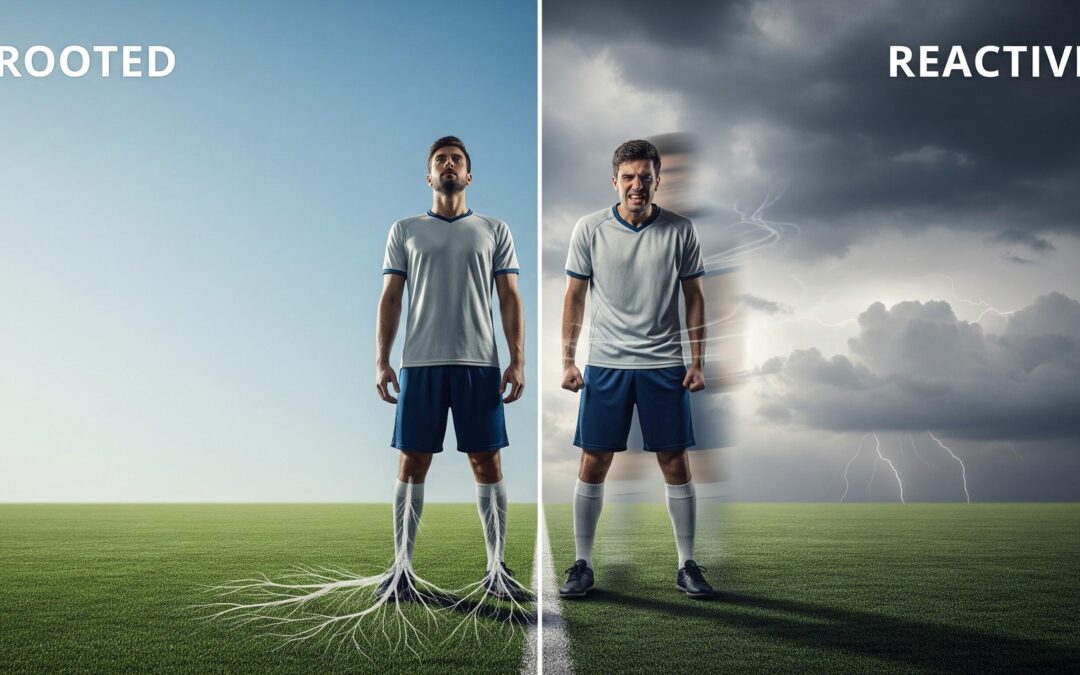
Georgia Miller uses a powerful metaphor: a tree with deep, strong roots can withstand storms, while a shallow-rooted tree is easily toppled. The same is true for athletes.
Reactive Athletes:
- Emotionally Driven: Quick to frustration, nervousness, or anxiety after mistakes.
- Outcome-Dependent Confidence: Need early success or positive feedback to feel capable.
- External Validation Seekers: Rely on coaches’ or teammates’ praise; easily shaken if it’s absent.
- Fear-Based Play: Focus on avoiding mistakes rather than playing to win.
- Performance Swings: Play better in practice than in games due to fear of judgment.
Rooted Athletes:
- Response-Oriented: Thoughtful, measured reactions to adversity.
- Process-Focused Confidence: Trust preparation and internal standards, not just outcomes.
- Self-Validation: Confidence comes from within, not from others’ opinions.
- Freedom to Compete: Play to win, not just to avoid errors.
- Consistent Performance: Maintain stability regardless of external circumstances.
Key Insight:
Pressure and adversity don’t create behavior—they reveal it. Your response under stress shows your true mental foundation.
The Impact of Emotional Regulation on Performance
Emotional regulation is the linchpin of athletic performance. Georgia explains that reactive athletes let emotions dictate their actions, leading to:
- Tightening up after mistakes
- Playing it safe instead of taking calculated risks
- Allowing negative feedback or lack of praise to derail focus
Rooted athletes, by contrast, use emotional regulation to:
- Stay neutral after both successes and failures
- Reflect constructively on what can be improved
- Maintain focus on controllable factors (attitude, effort, response)
Expert Tip:
Rooted athletes don’t suppress emotions—they acknowledge them, but don’t let them take the wheel.
Real-World Examples: Reactive vs. Rooted Responses
Georgia brings these concepts to life with vivid sports scenarios:
Baseball: The Pitcher’s Dilemma
- Reactive Pitcher: Walks a batter, becomes frustrated, rushes routine, and loses focus.
- Rooted Pitcher: Accepts the walk as part of the game, resets with a breath, and focuses on the next pitch.
Soccer: Benched During a Game
- Reactive Athlete: Shuts down, disengages, and fixates on the coach’s decision.
- Rooted Athlete: Uses the time to hydrate, support teammates, and mentally prepare to re-enter.
After a Big Win
- Reactive Athlete: Rides an emotional high, posts excessively on social media, and may become complacent.
- Rooted Athlete: Expresses gratitude, credits teammates, and immediately reflects on how to keep improving.
Takeaway:
Rooted athletes are defined by their response to events, not the events themselves.
The Social Media Trap: Protecting Your Mindset
Social media amplifies the challenges of staying rooted:
- Reactive Athletes: Compare themselves to others, post only highlights, and let online feedback dictate mood.
- Rooted Athletes: Set boundaries (e.g., avoid social media after games), understand the curated nature of online content, and maintain a strong identity outside of sport.
Actionable Advice:
- Limit social media use, especially after competitions.
- Remind yourself that what you see online is not the full story.
- Focus on your journey, not others’ highlight reels.
Why Athletes Get Stuck in Reactive Patterns
Georgia highlights a common trap: identity fusion with athletic performance.
- Year-round sports culture can make athletes feel like their worth is tied to results.
- No reset routine or mental framework leads to emotional rollercoasters based on outcomes.
- Constant self-evaluation is exhausting and erodes confidence.
Rooted athletes separate who they are from what they do. They focus on execution in the moment and save analysis for after the game.
Actionable Tips to Become a Rooted Athlete
1. Develop a Reset Routine
A reset routine is a symbolic action or phrase that helps you let go of mistakes and refocus. This is a cornerstone of Georgia’s coaching.
How to Build Your Reset Routine:
- Choose a Phrase:
- “Mistake doesn’t matter; what matters is my response.”
- “Next play, best play.”
- Pick a Physical Action:
- Tug your socks, adjust your hat, or take a deep breath while looking at a distant object.
- Consistency is Key:
- Use the same routine every time you need to reset, so it becomes automatic.
Why It Works:
It signals to your brain that it’s time to move on, preventing emotional spirals and keeping you present.
2. Clarify and Live Your Core Values
Forget the vague advice to “just be yourself.” Instead, choose who you want to be and act accordingly.
Steps to Clarify Your Values:
- Reflect:
- How do you want teammates to describe you?
- What qualities do you admire in others?
- Identify Core Values:
- Examples: Hard work, resilience, teamwork, integrity.
- Act “As If”:
- If you want to be confident, act confidently—even if you don’t feel it yet.
- If you want to be resilient, demonstrate resilience in tough moments.
Pro Tip:
Write your values somewhere visible (locker, phone background) as a daily reminder.
Expert Advice: Building Your Unchanging Foundation
Being rooted means having something unchanging to hold onto when adversity hits. Your values, attitude, effort, and response to mistakes are always within your control.
- You will feel emotions—don’t fight them.
The goal is to prevent emotions from hijacking your performance.
- Let your values guide you, not your feelings.
- Remember: Sport is something you do, not who you are.
Final Thoughts
Rooted athletes aren’t born—they’re built. By developing a reset routine, clarifying your values, and focusing on what you can control, you can weather any storm and perform at your best, no matter the circumstances.
Stay grounded. Stay resilient. And remember: your roots are your greatest strength.
Listen to the full episode of the Rooted Sports Psychology Show here.
Confidence is a buzzword in sports and performance psychology. Athletes, coaches, and parents all want to know: How do you get more of it? But as Georgia, host of the Rooted Sports Psychology Show, explains, the pursuit of confidence can be a double-edged sword. Instead, she advocates for a subtle but powerful shift: focus on courage, not confidence.
In this in-depth blog post, we’ll break down the main themes and actionable tips from the episode, offering expert insights and practical strategies to help you or your athletes build a more resilient, stable foundation for peak performance.
The Confidence Trap: Why Chasing Confidence Can Backfire
The Problem with Outcome-Based Confidence
Georgia opens the conversation by highlighting a common pitfall: reactive confidence. Many athletes tie their sense of self-assurance to immediate results—making a great play, scoring early, or nailing the first serve. When things go well, confidence soars. But when the first few moments don’t go as planned, confidence can evaporate, leaving athletes tentative and risk-averse.
Key Risks of Outcome-Based Confidence:
- Fragility: Your mental state is at the mercy of external events.
- Inconsistency: Confidence fluctuates wildly, making performance unpredictable.
- Fear of Failure: Athletes may play it safe to avoid mistakes, stifling growth and creativity.
Expert Insight:
Even elite athletes don’t feel confident all the time. What sets them apart is their ability to keep performing, even when confidence is low.
The Courage Mindset: A More Reliable Path to Growth
Why Courage Matters More Than Confidence
Georgia’s core message is simple but profound: Don’t wait for confidence to act. Instead, act with courage, and confidence will follow.
Courage is the willingness to take action despite fear, discomfort, or uncertainty. It’s about doing what matters, even when you don’t feel ready.
Everyday Examples of Courage Building Confidence
- Making a Phone Call: Remember being nervous to order pizza as a kid? You didn’t feel confident, but you did it anyway. Over time, it got easier.
- Introducing Yourself: The first time you meet someone new, it’s nerve-wracking. But each courageous introduction builds social confidence.
- Approaching a Crush: Many people feel anxious starting a conversation with someone they like. Courage comes first; confidence grows with experience.
Actionable Takeaway:
You don’t need to feel confident to perform well. You need the courage to take the shot, make the call, or step onto the field.
Actionable Strategies to Cultivate Courage (and Let Confidence Follow)
1. Reflect on Past Acts of Courage
Why it works:
Remembering times you acted courageously—even when you were scared—reminds you that you’re capable of facing discomfort and uncertainty.
How to do it:
- List moments in sports or life when you acted despite fear (e.g., trying out for a team, speaking in public, taking a game-winning shot).
- Ask yourself: What helped me push through? Was it focusing on the outcome, support from others, or simply deciding to act?
Expert Tip:
Use these memories as evidence that you can handle discomfort and uncertainty in the future.
2. Shift Your Focus from Confidence to Courage
Why it works:
Chasing confidence can lead to frustration and self-doubt. Focusing on courage puts the emphasis on action, not feelings.
How to do it:
- Before a performance, ask: What’s the courageous thing to do right now?
- Set “courage goals” instead of “confidence goals.” For example, “I will take the shot even if I missed the last one,” or “I will introduce myself to a new teammate.”
Expert Tip:
Remind yourself: Courage is a choice, not a feeling.
3. Use Simple Tools to Take Action
Why it works:
Sometimes, the hardest part is getting started. Simple strategies can help you move from hesitation to action.
How to do it:
- Countdown Method: Count down from 3 and then act (e.g., “3, 2, 1, go!”).
- Support System: Lean on teammates, friends, or coaches for encouragement.
- Visualize the Outcome: Focus on the benefits of taking action, not just the risks.
Expert Tip:
Taking even a small step forward can break the cycle of overthinking and build momentum.
4. Seek Support When Needed
Why it works:
Asking for help is an act of courage, not weakness. It accelerates learning and builds confidence over time.
How to do it:
- If you’re struggling with a skill (like serving in tennis), have the courage to reach out to a coach for a private lesson.
- Share your fears or doubts with a trusted mentor or teammate.
Expert Tip:
The act of seeking support is itself a confidence-building experience.
Building Resilient Confidence: The Long-Term Payoff
By consistently choosing courage, you create a foundation for resilient, stable confidence—the kind that doesn’t crumble after a bad play or a tough day. Over time, courageous actions accumulate, and confidence becomes a byproduct of your willingness to face discomfort and keep moving forward.
Weekly Challenge:
For the next week, don’t chase confidence. Instead, look for opportunities to be courageous. Take action, even when you don’t feel ready. Notice how your confidence grows as a result.
Final Thoughts & Next Steps
Confidence is not a prerequisite for action—it’s a result of courageous action. By shifting your focus from waiting to feel confident to choosing to be courageous, you’ll build a more robust, reliable foundation for performance and growth.
Want more personalized support?
Visit Georgia’s website or email her directly for one-on-one coaching and resources.
Listen to the full episode of the Rooted Sports Psychology Show here.
Stay tuned for more expert insights and actionable tools to help you elevate your game!