The five-year-old who trains year-round in one sport may look polished on the field, but they’re missing something critical: the humility of starting over, the thrill of discomfort, and the resilience that comes from failing in an unfamiliar arena. Playing multiple sports isn’t just about cross-training your body—it’s about conditioning your mind to adapt, grow, and recover from setbacks that single-sport specialization never teaches.
In a recent episode of the Rooted Sport Psychology Show, host Georgia Miller unpacks the advantages of multi-sport participation with her brother Grayson Miller, a former multi-sport high school athlete who eventually specialized in football and track. Together, they explore the physical, mental, and social benefits of playing multiple sports—and the hidden costs of early specialization.
Below, we break down the key insights from their conversation, including how playing multiple sports builds better habits, broader perspectives, and more resilient athletes. Whether you’re an athlete weighing your options, a parent navigating youth sports, or a coach shaping young competitors, this article offers a roadmap for long-term athletic development.
Why Playing Multiple Sports Matters More Than Early Mastery
Specialization promises a head start. However, it often delivers a ceiling. Athletes who focus on one sport from a young age may develop technical skills early, but they frequently plateau by high school—physically, mentally, and emotionally.
Grayson played baseball, basketball, football, and track throughout his youth. Each sport contributed something distinct to his development. Baseball taught composure in a game defined by failure. Basketball forced him outside his comfort zone, building grit in an arena where he had no natural talent. Track sharpened his explosiveness and technique, which translated directly into football performance.
By the time he reached his junior year of high school, the cumulative benefits of playing multiple sports became exponential. His decision to focus on football and track wasn’t about abandoning the other sports—it was about recognizing where his growth trajectory was steepest.
Key Insight:
Multi-sport athletes don’t just develop diverse skills—they learn how to learn, adapt, and recover in ways that specialized athletes rarely experience.
The Physical Advantages of Multi-Sport Participation
Playing multiple sports conditions different muscle groups, movement patterns, and energy systems. This variety reduces overuse injuries and builds a more versatile athletic foundation.
1. Cross-Training Prevents Overuse Injuries
Repetitive motion in a single sport stresses the same joints, tendons, and ligaments year-round. Baseball pitchers develop shoulder issues. Soccer players suffer from chronic knee strain. Multi-sport athletes distribute physical stress across different movement patterns, giving overworked areas time to recover.
Why It Works:
Seasonal rotation allows the body to recover from sport-specific demands while maintaining overall conditioning. A basketball player’s lateral agility work complements a baseball player’s rotational power, creating a more balanced athlete.
How to Apply:
- Rotate sports by season: Spring baseball, fall football, winter basketball—each sport trains different systems.
- Prioritize movement diversity: Linear sprinting, lateral cuts, rotational power, and vertical jumps all contribute to well-rounded athleticism.
- Listen to your body: If one sport causes chronic pain, another sport’s movement patterns may offer relief and recovery.
Expert Insight:
Diversified training builds durability, not just performance—a critical advantage for long-term athletic careers.
2. Multi-Sport Athletes Develop Greater Explosiveness and Coordination
Grayson’s track training sharpened his explosiveness in ways that football drills alone never could. The technical precision required in sprinting, jumping, and starting mechanics translated directly into faster cuts, quicker reactions, and more powerful movements on the football field.
Why It Works:
Each sport emphasizes different aspects of athleticism. Track develops raw speed and explosive power. Basketball builds lateral quickness and hand-eye coordination. Baseball hones rotational mechanics and timing. When combined, these skills create a more complete athlete.
How to Apply:
- Identify complementary sports: Football and track, volleyball and basketball, soccer and lacrosse—look for pairings that enhance overlapping skills.
- Focus on transferable skills: Footwork, reaction time, spatial awareness, and body control all carry across sports.
- Train the gaps: If your main sport lacks a physical component (e.g., upper-body strength in soccer), choose a secondary sport that fills that gap.
Expert Insight:
Athletic development isn’t linear—it’s cumulative, and multi-sport participation accelerates that process.
The Mental and Emotional Benefits of Playing Multiple Sports
The psychological advantages of multi-sport participation often outweigh the physical ones. Athletes who play multiple sports develop resilience, adaptability, and a healthier relationship with failure.
1. Multi-Sport Athletes Learn How to Fail—and Recover
Grayson admitted he had “absolutely no natural ability” in basketball. Nevertheless, he worked relentlessly to improve, eventually reaching a level where he could contribute. That experience taught him what it felt like to struggle, adapt, and grow—a lesson that transferred directly into football.
Georgia highlighted a common pattern among specialized athletes: they often fear failure because they’ve never experienced true incompetence. When you’ve been elite at one sport since age five, the first real setback can feel catastrophic. Multi-sport athletes, by contrast, have already navigated the discomfort of being a beginner.
Why It Works:
Failure in a low-stakes environment (a secondary sport) builds emotional resilience that protects performance in high-stakes environments (your primary sport). You learn that struggle doesn’t define you—your response does.
How to Apply:
- Choose a sport where you’re not naturally gifted: The discomfort is the point. It teaches you how to work through adversity.
- Reframe failure as feedback: Every mistake in your secondary sport is a low-risk opportunity to practice composure and problem-solving.
- Celebrate effort over outcome: Track improvement in your secondary sport based on effort, attitude, and growth—not wins or stats.
Expert Insight:
Athletes who have failed and recovered are far more resilient than those who have only succeeded.
2. Multi-Sport Participation Prevents Burnout
Grayson noted that rotating sports kept him engaged year-round. By the time he was tired of baseball season, football was starting. By the time football ended, track was beginning. The variety sustained his motivation and prevented the monotony that leads to burnout.
Georgia emphasized that athletes who specialize at age five face a dramatically higher risk of burnout by age fifteen. The repetition, pressure, and lack of novelty drain intrinsic motivation, leaving athletes exhausted and disengaged.
Why It Works:
Novelty fuels motivation. Switching sports resets your mental energy, introduces new challenges, and keeps training fresh. You’re always building toward something new rather than grinding through the same routines year after year.
How to Apply:
- Rotate sports seasonally: Even if you have a primary sport, consider a secondary sport during the off-season to maintain engagement.
- Monitor motivation levels: If you dread practice, feel emotionally flat, or lose joy in your sport, burnout may be setting in. A secondary sport can reignite that spark.
- Prioritize fun: Your secondary sport should feel like play, not pressure. Let it be the space where you relax and enjoy movement.
Expert Insight:
Burnout isn’t a sign of weakness—it’s a predictable outcome of monotony and pressure without relief.
3. Playing Multiple Sports Builds a Growth Mindset
Athletes who specialize early often develop a fixed mindset around their sport. They believe their talent is innate and unchangeable, which makes setbacks feel threatening. Multi-sport athletes, by contrast, experience firsthand that skill is built through effort, not just talent.
Grayson’s basketball experience exemplifies this. He wasn’t naturally gifted, but he worked hard, improved, and eventually contributed. That process taught him that growth is always possible—a belief that carried into every other area of his athletic career.
Why It Works:
A growth mindset transforms challenges into opportunities. When you’ve already proven to yourself that you can improve in one sport, you trust that you can improve in another. This belief fuels persistence, resilience, and long-term development.
How to Apply:
- Reflect on your multi-sport journey: Identify moments when you improved through effort, not talent. Use those memories as evidence that growth is always possible.
- Embrace discomfort: Seek out challenges in your secondary sport. The struggle is where growth happens.
- Ask yourself: “What can I learn from this sport that will make me better in my primary sport?”
Expert Insight:
Growth mindset isn’t taught—it’s earned through experiences that prove effort leads to improvement.
The Social Benefits of Playing Multiple Sports
Multi-sport participation broadens your social circle, exposes you to different coaching styles, and helps you recognize healthy team dynamics.
1. Exposure to Different Coaches and Coaching Styles
Every coach has a different philosophy, communication style, and approach to development. Playing multiple sports exposes you to a wider range of mentorship, teaching you how to adapt to different leadership styles and extract value from diverse perspectives.
Why It Works:
Adaptability is a critical life skill. Athletes who learn to thrive under different coaches develop emotional intelligence, communication skills, and the ability to adjust their approach based on context.
How to Apply:
- Observe coaching differences: Notice how different coaches motivate, correct, and communicate. What works for you? What doesn’t?
- Ask questions: Use your secondary sport as a low-pressure environment to experiment with new techniques and strategies.
- Build relationships: Coaches from different sports can offer fresh perspectives on your primary sport.
Expert Insight:
The best athletes aren’t just coachable—they’re adaptable, able to extract value from any coaching style.
2. Broader Social Circles and Healthier Team Dynamics
Georgia shared an example of a track athlete who struggled with performance anxiety and negative teammates. When the athlete picked up volleyball, she experienced what supportive, encouraging teammates felt like. That contrast gave her perspective, helping her let go of negativity in track and relax into her performance.
Why It Works:
Exposure to different team cultures teaches you what healthy dynamics look like. You learn to recognize toxicity, set boundaries, and seek out environments that support your growth.
How to Apply:
- Reflect on team culture: What does a supportive team feel like? What does a toxic team feel like? Use those experiences to guide your choices.
- Build diverse friendships: Multi-sport participation introduces you to different peer groups, reducing social pressure and broadening your support network.
- Set boundaries: If one team environment is draining, your secondary sport can offer relief and perspective.
Expert Insight:
Healthy team dynamics aren’t optional—they’re essential for long-term performance and well-being.
The Hidden Costs of Early Specialization
Early specialization promises mastery, but it often delivers stagnation. Athletes who focus on one sport from a young age frequently hit a performance ceiling by high school, both physically and mentally.
1. Specialized Athletes Often Peak Early
Grayson observed a pattern among highly specialized high school quarterbacks. Many five-star recruits who had focused exclusively on quarterback training since age twelve entered college having already maxed out their athletic potential. They had no room to grow because they’d spent years refining the same skills in the same context.
Meanwhile, athletes like Patrick Mahomes—who played multiple sports in high school—entered college with untapped potential. They had developed a broader athletic foundation, giving them more room to grow once they specialized.
Why It Happens:
Specialization accelerates early development but limits long-term growth. Multi-sport athletes develop slower initially but have a higher ceiling because they’ve built a more versatile foundation.
How to Avoid It:
- Delay specialization: Most athletes don’t need to specialize until high school. Some don’t need to specialize until college.
- Prioritize athleticism over technique: In youth sports, focus on building speed, strength, coordination, and movement literacy—not sport-specific skills.
- Trust the process: If you’re good enough, coaches will find you. A late start doesn’t mean a lost opportunity.
Expert Insight:
Early mastery often signals a low ceiling, not high potential.
2. Specialized Athletes Fear Failure More Intensely
Athletes who have only ever excelled in one sport often develop a fragile identity. Their self-worth becomes tied to performance, making failure feel existential. Multi-sport athletes, by contrast, have already experienced failure in a secondary sport, which teaches them that setbacks are survivable.
Georgia noted that specialized athletes often enter her office with intense performance anxiety and avoidance behaviors. They’ve never learned how to fail and recover, so they spend enormous energy trying to avoid mistakes rather than pursuing excellence.
Why It Happens:
Specialization creates a narrow identity. When your entire sense of self is tied to one sport, every mistake feels like a threat. Multi-sport athletes have a broader identity, which protects them from performance-related anxiety.
How to Avoid It:
- Diversify your identity: You are more than your sport. Pursue hobbies, relationships, and interests outside of athletics.
- Reframe failure: Failure isn’t a verdict on your worth—it’s feedback on your current approach.
- Seek discomfort: Regularly put yourself in situations where you’re not the best. It builds resilience and perspective.
Expert Insight:
Athletes with diverse identities perform better under pressure because their self-worth isn’t entirely at stake.
How to Know When It’s Time to Specialize
Both Georgia and Grayson emphasized that the decision to specialize should feel obvious, not forced. For Grayson, it happened naturally during his junior year of high school when his football performance began accelerating faster than his baseball performance.
Georgia’s decision was even simpler: she came home from soccer practice one day and told her mom, “I don’t like running.” She switched to volleyball the next day and never looked back.
Signs It’s Time to Specialize
- You love one sport significantly more than the others: Passion fuels persistence. If you’re obsessed with one sport and indifferent to the others, that’s a clear signal.
- Your growth trajectory is steeper in one sport: If you’re improving faster in one sport despite equal effort, that’s where your potential lies.
- You’re willing to sacrifice for one sport but not the others: Specialization requires commitment. If you’re eager to train year-round in one sport but dread it in another, trust that instinct.
- Coaches or mentors identify your potential: External validation matters. If a trusted coach tells you that you have division-one potential in one sport, take that seriously.
Key Insight:
Specialization should feel like a natural progression, not a forced decision. When you know, you know.
Final Thoughts: Let the Process Unfold
Playing multiple sports isn’t about delaying commitment—it’s about building a foundation that supports long-term success. The habits, resilience, and perspective gained through multi-sport participation create better athletes, not just more versatile ones.
If you’re an athlete, trust the process. If you’re a parent, resist the pressure to specialize early. If you’re a coach, encourage multi-sport participation and celebrate the athletes who show up with diverse experiences. The skills they’re building now will pay dividends for years to come.
Listen to the Full Episode
Want more? Listen to the full conversation on Spotify or Apple Podcasts.
Want Personalized Help?
Georgia offers free consultations for athletes navigating multi-sport decisions, managing performance anxiety, or building mental resilience. Whether you’re weighing specialization or working through burnout, request a free consultation to get tailored support.
Don’t let early specialization cap your potential—let your diverse experiences set you apart.
Practice time is sacred. As a coach, you have limited hours each week to develop skills, run drills, and prepare your team for performance. The last thing you need is another demand on that time. Yet mental performance often gets sidelined—not because coaches don’t value it, but because it feels like an add-on that requires extra hours or a specialist to implement.
In a recent episode of the Rooted Sport Psychology Show, host Georgia Miller unpacks six simple sport psychology for coaches strategies that can be woven directly into existing practice routines. These tools require only minutes, not seminars, and they strengthen the mental game without sacrificing a single rep.
Below, we break down each strategy with clear application steps and expert insight. Whether you coach at the middle school, high school, or collegiate level, these tools will help you build more confident, resilient, and cohesive athletes.
Why Sport Psychology Belongs in Every Practice
Sport psychology doesn’t require a separate session or a guest speaker. Instead, it thrives when embedded into the daily rhythm of practice. Georgia emphasizes that mental skills—like focus, self-talk, and team awareness—are just as trainable as physical skills. Moreover, they compound over time when practiced consistently.
Many coaches hesitate because they assume mental training demands too much time or expertise. However, the strategies below prove otherwise. Each one takes two to five minutes and can be implemented immediately, regardless of your sport or level.
Key Insight:
Mental habits built consistently in practice will outperform one-time motivational speeches every time.
Six Simple Sport Psychology Strategies for Coaches
Georgia outlines six practical tools that coaches can use to integrate mental performance into everyday training. Each strategy is designed to fit seamlessly into your existing practice structure.
1. Always Include a Quick Team Debrief
A two-to-three-minute team debrief at the end of practice shifts athletes’ focus from individual mistakes to collective progress. This simple ritual builds reflection, accountability, and team cohesion.
Why It Works:
Athletes often spiral into self-criticism after practice, replaying their errors on a loop. A team debrief redirects that energy toward constructive reflection and shared goals. It reminds players that they are part of something larger than their individual performance.
How to Apply:
- Ask two questions: “What did we do well today?” and “What’s one thing we can improve on for tomorrow?”
- Emphasize “we” language: Keep the focus on team contributions, not individual stats.
- Keep it brief: Two to three minutes is enough to build awareness without dragging out the end of practice.
- End forward-focused: The second question primes athletes to think about tomorrow’s plan, not dwell on today’s mistakes.
Expert Insight:
This ritual trains athletes to reflect constructively and stay connected to team goals, reducing the mental weight of individual errors.
2. Use Two Minutes of Visualization
Visualization is one of the most researched mental skills in sport psychology, yet it remains underutilized in practice settings. Georgia recommends a simple two-minute visualization exercise before or after practice to train the mind alongside the body.
Why It Works:
Visualization activates the same neural pathways as physical practice. When athletes see themselves executing a skill successfully, they build confidence and reinforce motor patterns. Additionally, it trains focus—athletes must stay present and engaged without the distraction of their phones or external stimuli.
How to Apply:
- Before practice: Have athletes lie down on the field or court, close their eyes, and visualize themselves performing one skill exceptionally well that day.
- After practice: Ask them to replay one thing they did well, like a personal highlight reel.
- Set the tone: Guide them with a prompt: “Take a deep breath in, deep breath out. Now picture yourself making that perfect pass.”
- Use a timer: Set a two-minute timer on your phone and gently bring them back when time is up.
Expert Insight:
Visualization builds confidence and focus simultaneously, training the mind to rehearse success just as the body rehearses movement.
3. Set a Mental Focus for Practice
Every practice should have a mental focus in addition to physical drills. Georgia suggests choosing one mental skill—like communication, next-play mentality, or body language—and making it the theme of the day.
Why It Works:
A mental focus gives purpose beyond reps. It signals to athletes that mental performance matters just as much as physical execution. Furthermore, it creates a shared language and culture around mental skills.
How to Apply:
- Announce the focus at the start: “Today we’re working on communication. I want to hear you loud and clear between plays.”
- Check in at water breaks: “How are we doing on our mental focus? Who’s leading the way?”
- Get buy-in from assistant coaches and captains: Have them reinforce the focus throughout practice with reminders and praise.
- Examples of mental focuses: Next-play mentality, positive body language, vocal leadership, staying present, or controlled breathing under pressure.
Expert Insight:
A mental focus transforms practice from a series of drills into a holistic training environment where mind and body develop together.
4. Watch Your Wording
The language coaches use shapes athletes’ self-talk. Georgia highlights a critical distinction: tell athletes what to do, not what to avoid. This subtle shift has a profound impact on performance.
Why It Works:
The brain struggles with negation. When you say “don’t drop your head,” the last word athletes hear is “drop.” Their internal focus lands on the mistake, not the correction. In contrast, “keep your head up” gives the brain a clear, actionable directive. Over time, this becomes the athlete’s self-talk.
How to Apply:
- Replace “don’t” with “do”: Instead of “don’t shank,” say “move your feet and hold.”
- Be specific: “Stay low through the turn” is more effective than “don’t stand up.”
- Model it consistently: The more you use positive, directive language, the more athletes will internalize it.
- Teach athletes to reframe their own self-talk: Encourage them to catch themselves saying “don’t miss” and replace it with “make the shot.”
Expert Insight:
Positive, directive language trains athletes to focus on execution, not avoidance, which leads to more confident and decisive performance.
5. Reward Effort, Not Just Outcomes
What you praise is what gets repeated. Georgia urges coaches to highlight effort-based behaviors—hustle, communication, body language—rather than only celebrating outcomes like points or wins.
Why It Works:
When coaches only praise outcomes, athletes begin to play scared. They avoid mistakes rather than pursue excellence. Conversely, when effort and process are rewarded, athletes play with freedom and confidence. They learn that their value is not tied solely to results.
How to Apply:
- Call out hustle plays: “Great recovery, Sarah—that’s the energy we need.”
- Praise communication: “I love hearing you talk out there, Marcus. Keep it up.”
- Highlight body language: “Even after that mistake, you stayed confident. That’s leadership.”
- Balance correction with recognition: For every correction, find one effort-based behavior to praise.
Expert Insight:
Rewarding effort over outcomes builds a culture where athletes play with confidence and resilience, not fear of failure.
6. Ask Questions Instead of Always Telling
Coaches often default to telling athletes what went wrong. Georgia recommends flipping the script: ask questions that build awareness and ownership.
Why It Works:
Questions engage athletes’ critical thinking and self-awareness. Instead of passively receiving feedback, they actively reflect on their performance. This builds autonomy, accountability, and trust. Additionally, it helps coaches understand what athletes are thinking, which can inform how skills and drills are taught.
How to Apply:
- Replace “You need to focus more” with: “What were you focused on there?”
- Ask “What did you notice?” instead of immediately correcting.
- Use open-ended prompts: “What would you do differently next time?” or “How did that feel?”
- Listen genuinely: Give athletes space to answer without jumping in too quickly.
Expert Insight:
Asking questions builds self-awareness and trust, empowering athletes to take ownership of their mental and physical development.
How to Implement These Tools Without Losing Practice Time
One of the most common objections Georgia hears from coaches is, “I don’t have time.” However, these six strategies require a combined total of fewer than ten minutes per practice. Moreover, they enhance the quality of practice by improving focus, communication, and mental resilience.
Consider this structure for a two-hour practice:
- Start with a mental focus announcement: 30 seconds
- Two-minute visualization before warm-up: 2 minutes
- Use directive language throughout: no extra time
- Reward effort during drills: no extra time
- Ask questions during water breaks: 1–2 minutes
- End with a team debrief: 2–3 minutes
Total time investment: approximately 6–8 minutes. The return on that investment is a more mentally prepared, cohesive, and confident team.
According to research published by the American Psychological Association’s Sport, Exercise, and Performance Psychology journal, consistent mental skills training integrated into practice improves not only performance outcomes but also athlete satisfaction and team cohesion.
Final Thoughts: Small Habits, Big Impact
Sport psychology for coaches doesn’t require a complete overhaul of your practice plan. Instead, it thrives in the margins—two minutes here, a question there, a shift in language throughout. These small, consistent habits compound over time, building athletes who are not only physically skilled but also mentally resilient and team-oriented.
Georgia’s six strategies prove that mental performance training can be simple, practical, and seamlessly integrated into what you’re already doing. The key is consistency. When these tools become part of your team’s culture, they stop feeling like add-ons and start feeling like essentials.
Listen to the Full Episode
Want more? Listen to the full conversation on Spotify or Apple Podcasts.
Want Personalized Help?
Georgia offers free consultations for coaches looking to build mental performance into their team culture. Whether you’re working with middle schoolers or collegiate athletes, she can help you design a plan that fits your schedule and your team’s needs. Request a free consultation to get tailored support.
Don’t let limited time keep you from building mentally strong athletes—let these six tools set your team apart.
You’re scrolling through social media, watching teammates announce their commitments. Your inbox feels quieter than you’d hoped. Meanwhile, you’re wondering if you’re doing something wrong, if you’re good enough, or if your dream school will ever notice you.
In a recent episode of the Rooted Sport Psychology Show, host Georgia Miller unpacks the recruiting process alongside her brother Grayson Miller, a former Division I football player and coach. Together, they share personal recruiting journeys—both the wins and the mistakes—to help athletes navigate this challenging season with clarity and confidence.
Below, we break down the most common recruiting pitfalls, what coaches actually look for in athletes, and how to approach camps, communication, and commitment decisions with the right mindset. Whether you’re aiming for a D1 scholarship or a D3 starting spot, these recruiting process tips will help you own your path.
The Biggest Recruiting Mistakes Athletes Make
Georgia and Grayson both made missteps during their recruiting journeys. However, those mistakes taught them what works—and what doesn’t—when trying to earn a spot on a college roster.
1. Letting Comparison Steal Your Confidence
Grayson recalls feeling intimidated during his recruiting process because he was comparing himself to athletes across the country. He thought he should be hearing from bigger programs, and when those calls didn’t come, doubt crept in. Meanwhile, Georgia watched peers commit earlier and felt pressure to match their timelines.
What Happens:
Comparison shifts your focus from your own performance to everyone else’s highlight reel. Consequently, you lose sight of your strengths and the unique value you bring to a program.
Why It Hurts:
Every athlete’s recruiting timeline is different. Some commit sophomore year; others sign in March of their senior year. Additionally, coaches recruit based on team needs, not just talent. Comparing yourself to someone playing a different position or in a different region is rarely productive.
Key Insight:
Your race is your own—where you finish and how you cross that line is up to you.
2. Approaching Camps with the Wrong Mindset
Georgia remembers attending a Grand Valley camp with sky-high expectations. She thought coaches would flock to her, and when they didn’t, she left feeling miserable. She was playing to impress rather than playing to compete.
In contrast, Grayson attended a one-day Michigan State camp with a “nothing to lose” mentality. He had offers from other schools, so he walked onto the field confident and free. That day, he earned a full scholarship.
What Happens:
When you attend a camp expecting perfection, every mistake feels catastrophic. You play safe, timid, and tight. Meanwhile, coaches are watching to see how you respond under pressure—not whether you’re flawless.
Why It Matters:
Coaches want to see your true game. They review full game film, not just highlight reels. Therefore, they already know you’ll make mistakes. What they’re evaluating is your competitiveness, body language, and resilience.
Key Insight:
Camps are opportunities to showcase your game, not auditions for perfection.
3. Chasing the Wrong Dream for the Wrong Reasons
Georgia admits she initially felt pressure to pursue Division I because her brother played at that level. However, she realized she valued playing time and impact over prestige. Once she owned that decision, her recruiting process became smoother and more authentic.
Grayson emphasizes that many athletes commit to schools for social approval—the glorified tweet moment—rather than fit. This often leads to transfers, burnout, or regret.
What Happens:
When you chase a level or a name instead of a fit, you risk ending up somewhere you don’t belong. As a result, you may sit the bench for four years or feel disconnected from your team and coaches.
Why It’s a Problem:
College sports are demanding. If you’re not there for the right reasons, the grind becomes unbearable. Moreover, coaches can sense when an athlete isn’t fully bought in.
Key Insight:
Define what you actually want—not what looks good on social media.
What Coaches Really Look for in the Recruiting Process
Understanding what coaches value can shift your entire approach. Georgia and Grayson break down the traits that stand out—and the ones that get your name crossed off the list.
1. How You Respond to Mistakes
Coaches watch full game film. They see your errors, your turnovers, your missed assignments. What matters most is what happens next.
Why It Works:
A coach would rather recruit a talented athlete with strong mental resilience than a perfect player who crumbles under pressure. Additionally, they know they can teach skills, but attitude and effort are harder to develop.
How to Apply:
- Stay composed after mistakes. Keep your shoulders up, reset quickly, and refocus on the next play.
- Communicate with teammates. Coaches notice athletes who encourage others and stay engaged even after a bad play.
- Show consistency. One great game doesn’t outweigh three games of poor body language.
Expert Insight:
Coaches recruit athletes they believe can handle the mental demands of college sports—not just the physical ones.
2. Body Language and Attitude
Georgia shares that as a coach, she immediately crossed off any athlete who rolled her eyes, turned away from teammates, or responded poorly to feedback. Skill alone doesn’t earn a roster spot.
Why It Works:
Your body language tells coaches whether you’re coachable, whether you’ll fit the team culture, and whether you’ll handle adversity well. Furthermore, negative body language can poison a locker room.
How to Apply:
- Walk with confidence. Hold your head high, even after a tough set or quarter.
- Engage with your team. Celebrate others’ success. Be vocal in huddles.
- Respond well to coaching. Nod, make eye contact, and apply feedback immediately.
Expert Insight:
Coaches want athletes who make their jobs easier, not harder.
3. Authenticity and Consistency
Grayson emphasizes that coaches want to see the same person on the field as off the field. They review your social media, talk to your high school coaches, and watch how you interact with teammates during warm-ups.
Why It Works:
College coaches are building a culture, not just a roster. They need athletes who align with their program’s values and who will represent the team well in all settings.
How to Apply:
- Be yourself in communication. Don’t try to sound overly formal or fake in emails and texts.
- Present yourself well online. Coaches will Google you. Make sure your digital footprint reflects who you are.
- Show up consistently. Whether it’s a camp, a showcase, or a phone call, bring the same energy and professionalism.
Expert Insight:
Authenticity builds trust—and trust is what gets you recruited.
How to Approach Camps and Showcases
Camps can be intimidating, but they’re also one of the best opportunities to get in front of coaches. Georgia and Grayson offer strategies to maximize your performance and mindset.
1. Go in with a “Nothing to Lose” Mentality
Grayson’s Michigan State camp story is a perfect example. He didn’t expect anything, so he played free. That freedom allowed him to showcase his best self.
Why It Works:
When you release expectations, you play loose, confident, and aggressive. Coaches notice athletes who compete with joy and intensity, not fear.
How to Apply:
- Reframe the event. Instead of “I need to impress,” try “I get to compete.”
- Focus on controllables. Your effort, attitude, and communication are always within your control.
- Celebrate small wins. A great rep, a vocal moment, a strong finish—acknowledge those internally.
Expert Insight:
Freedom in competition comes from letting go of outcomes and leaning into the process.
2. Understand That Coaches Are Watching Everything
Georgia reminds athletes that coaches aren’t just watching drills. They’re observing how you treat other campers, how you respond to fatigue, and whether you stay engaged during downtime.
Why It Works:
Coaches want to know what kind of teammate you’ll be. Therefore, your behavior between drills matters just as much as your performance during them.
How to Apply:
- Stay engaged the entire time. Don’t check out mentally when you’re not actively participating.
- Encourage others. Compliment a fellow camper. Offer a hand up. Be positive.
- Ask thoughtful questions. Show genuine interest in the program and coaching staff.
Expert Insight:
Character reveals itself in the margins—and coaches are always watching.
3. Prepare Like It’s a Game
Don’t show up to a camp cold. Treat it like a championship game. Warm up properly, visualize success, and bring your best energy from the first drill.
Why It Works:
Preparation builds confidence. When you know you’ve done the work, you can trust your training and perform freely.
How to Apply:
- Review the camp schedule ahead of time. Know what drills or activities to expect.
- Get quality sleep the night before. Mental sharpness matters as much as physical readiness.
- Bring the right mindset. Remind yourself of your strengths and why you belong there.
Expert Insight:
Confidence is built in preparation, not in the moment.
Define What You Actually Want
One of the most powerful pieces of advice from this episode is Grayson’s challenge: define what you actually want. Not what your parents want. Not what looks impressive. What do you want?
Why It Matters:
Blanket statements like “I just want to play college sports” don’t give you direction. Specificity creates clarity, and clarity drives action.
How to Apply:
- Write it down. What level? What kind of program culture? What role do you want to play?
- Be honest with yourself. Would you rather start at a D3 school or sit the bench at a D1 program?
- Revisit and adjust. Your goals may shift as you learn more about yourself and the recruiting landscape. That’s okay.
Key Insight:
Your recruiting journey should reflect your values, not someone else’s expectations.
Trust the Process—Even When It’s Hard
Georgia and Grayson both emphasize that the recruiting process rarely unfolds the way you expect. However, looking back, both landed exactly where they needed to be.
Grayson didn’t plan to attend a Michigan State camp that summer. Georgia didn’t expect to fall in love with a D3 program. Yet both found their home because they stayed open, stayed resilient, and trusted the process.
Why It Works:
The recruiting process is as much about fit as it is about talent. Sometimes the schools that don’t recruit you are doing you a favor. Meanwhile, the program that does want you may be the perfect match you didn’t see coming.
How to Apply:
- Stay patient. Timelines vary. Your offer may come later than others, and that’s okay.
- Keep working. Control your effort, your attitude, and your development.
- Reflect regularly. Ask yourself: Am I staying true to what I want, or am I chasing what I think I should want?
Key Insight:
In a couple of years, when you’re settled at your school, it will all make sense why you ended up where you did.
Final Thoughts: Own Your Recruiting Journey
The recruiting process is one of the most challenging seasons an athlete will face. It tests your confidence, your patience, and your sense of self. However, it also offers an opportunity to define what you want, grow through adversity, and learn how to compete with nothing to lose.
Georgia and Grayson’s stories remind us that mistakes are part of the process. Comparison will always be tempting, but your path is your own. Moreover, the schools that want you are the ones that matter. Don’t chase a name or a level—chase a fit. Own your decision, trust your process, and show up as your authentic self every single time.
Listen to the Full Episode
Want more? Listen to the full conversation on Spotify or Apple Podcasts.
Want Personalized Help?
Georgia offers free consultations for athletes navigating the recruiting process and looking to build confidence, manage comparison, and perform under pressure. Request a free consultation to get tailored support for your recruiting journey.
Don’t let comparison or fear define your recruiting process—let your response and your resilience set you apart.
Adversity is a universal experience—whether you’re an athlete, a business leader, or simply navigating life’s unpredictable terrain. In a powerful episode of the Rooted Sport Psychology Show, host Georgia Miller sits down with Ty Gipson, an expert in mindset, leadership, and overcoming adversity. Ty’s journey—from a childhood diagnosis of juvenile diabetes to surviving multiple organ transplants—offers profound lessons on resilience, hope, and the transformative power of mindset.
This blog post dives deep into the main themes and actionable strategies Ty shares, breaking down his nuanced approach to overcoming obstacles. Whether you’re an athlete facing pressure, a coach guiding your team, or anyone striving for growth, these insights will help you build a resilient, high-performance mindset.
Ty Gipson’s Story: Adversity as a Catalyst for Growth
Ty’s life is a testament to the power of mental resilience. Diagnosed with brittle juvenile diabetes at age eight, he faced relentless medical challenges, culminating in a dual kidney and pancreas transplant in his thirties. Despite the physical and emotional toll, Ty refused to let his circumstances define him. Instead, he leveraged adversity as a springboard for personal growth, leadership, and helping others.
Key Takeaway:
Adversity is not the end of the road—it’s an opportunity to discover your inner strength and develop skills that serve you for life.
The Three-Step Mindset Approach to Overcoming Adversity
Ty’s core message centers on a practical, three-step mindset framework. This approach is designed to help anyone—athletes, performers, or everyday individuals—navigate setbacks and emerge stronger.
1. Grow or Die: The Power of Purposeful Response
Explanation:
When faced with adversity, Ty asks: “Am I going to grow or die in this situation?” Here, “die” doesn’t mean literal death, but rather giving up on your purpose, goals, or potential.
Actionable Advice:
- Reframe Setbacks: View every challenge as a chance to learn and improve. Ask yourself, “What can I gain from this experience?”
- Set Micro-Goals: Break down overwhelming obstacles into manageable steps. Celebrate small wins to build momentum.
- Reflect Regularly: After setbacks, take time to journal or discuss what you learned and how you can apply it moving forward.
Expert Insight:
Growth is a choice. Even in the darkest moments, you can decide to seek lessons and move forward, rather than surrender to defeat.
2. Hope or Despair: Choosing Your Focus
Explanation:
Ty emphasizes the critical role of hope in resilience. “Will you focus on the positives, or fall into victimhood?” he asks. Hope is the fuel that keeps you moving, while despair drains your energy and motivation.
Actionable Advice:
- Identify Your “Why”: Clarify what motivates you—family, personal goals, team success. Write it down and revisit it often.
- Practice Gratitude: Each day, note three things you’re grateful for, even if they’re small. This shifts your focus from what’s lacking to what’s possible.
- Visualize Success: Spend time each day vividly imagining yourself achieving your goals. This mental rehearsal strengthens neural pathways and boosts confidence.
Expert Insight:
Hope isn’t wishful thinking—it’s an active choice to believe in a better outcome and work toward it. Without hope, resilience falters.
3. Humor or Drama: Mastering Self-Talk
Explanation:
How you talk to yourself shapes your reality. Ty advocates for humor as a powerful antidote to stress and negativity. “Finding humor, even in tough situations, lightens the load and keeps us moving forward,” he says.
Actionable Advice:
- Monitor Your Inner Dialogue: Notice when your self-talk turns negative or dramatic. Pause and reframe with humor or positivity.
- Use Lightheartedness: In stressful moments, find something to laugh about—even if it’s just a silly joke. This can break the cycle of anxiety and tension.
- Encourage Others: Share humor and positive self-talk with teammates or peers. Collective positivity amplifies resilience.
Expert Insight:
Humor isn’t about denying reality—it’s about creating space to breathe, reset, and approach challenges with a lighter heart.
Practical Mindset Strategies for Athletes and High Performers
Ty’s advice goes beyond theory. Here are specific, actionable strategies discussed in the episode:
1. Write Down Specific Goals
- Be Precise: Instead of vague goals (“I want to be better”), define exactly what success looks like (“I want to improve my save percentage by 10% this season”).
- Track Progress: Regularly review and update your goals. This keeps you accountable and focused.
2. Visualize Daily
- Mental Rehearsal: Spend a few minutes each day visualizing yourself performing at your best. Imagine the sights, sounds, and feelings of success.
- Neural Pathways: Visualization isn’t just “positive thinking”—it physically primes your brain for action.
3. Transform Self-Talk
- Replace “I Can’t” with “I Can” and “I Will”: Language matters. Affirm your abilities, even when you feel doubt.
- Normalize Failure: Remember, even elite athletes fail often. Failure is feedback, not a verdict.
4. Embrace Adversity as Training
- Transferable Skills: The resilience you build in sports applies to every area of life—career, relationships, and beyond.
- Patience and Perspective: Injuries and setbacks teach patience and a deeper appreciation for your craft.
5. Consistent Mindset Training
- Daily Practice: Just as you train your body, train your mind. Set aside time for reflection, visualization, and goal-setting.
- Quiet Reflection: Find a quiet space to check in with yourself, recalibrate, and refocus.
Expert Recommendations for Coaches and Teams
- Model Resilience: Share your own stories of overcoming adversity. Vulnerability builds trust and inspires others.
- Foster a Growth Culture: Encourage athletes to see mistakes as learning opportunities, not failures.
- Celebrate Effort, Not Just Outcomes: Recognize hard work, persistence, and positive attitude as much as wins and stats.
Final Words: Hard Work Creates Luck
Ty’s closing wisdom is a reminder that what looks like “luck” is often the result of relentless effort and a resilient mindset. The athlete who makes the game-winning play has put in countless hours behind the scenes. The same is true for anyone striving for excellence.
Remember:
- You already have what it takes to overcome adversity.
- Mindset is a muscle—train it daily.
- Every day is a gift. Use it to grow, hope, and find joy, even in the struggle.
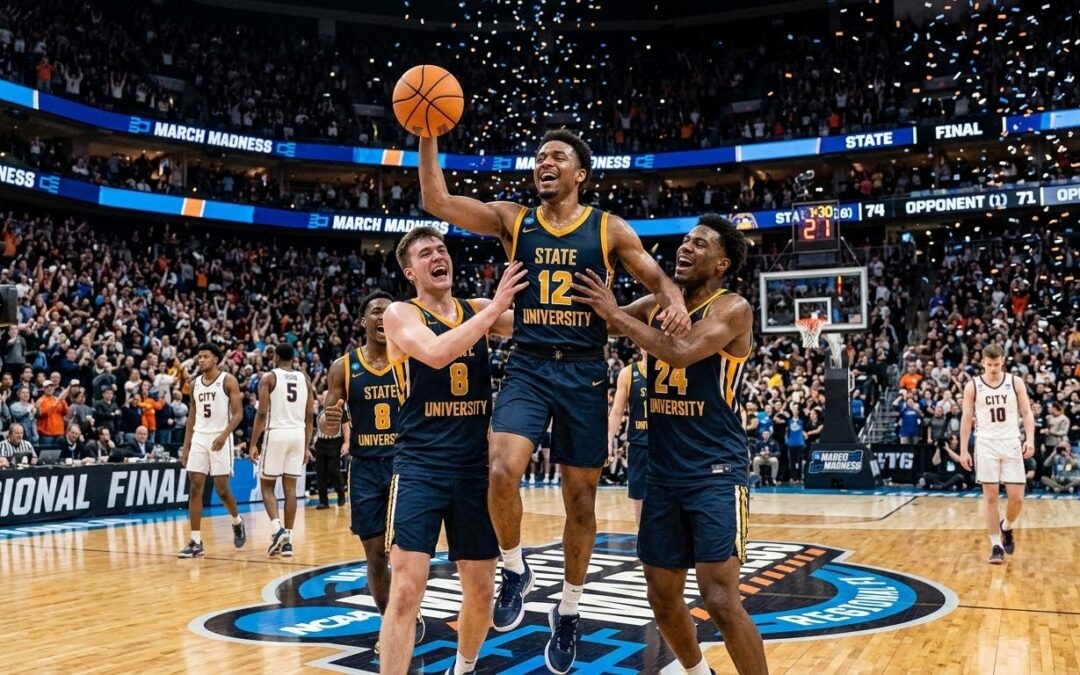
March Madness is a time when sports fans everywhere are glued to their screens, watching as underdog teams pull off jaw-dropping upsets against heavily favored opponents. But what’s really happening behind the scenes when a lower-seeded team topples a giant? In a recent episode of the Rooted Sport Psychology Show, host Georgia Miller dives deep into the psychology of underdog victories, revealing actionable strategies that athletes at any level can use to elevate their performance—whether they’re the favorite or the long shot.
In this blog post, we’ll break down Georgia’s expert insights, exploring the mental dynamics that fuel underdog wins and offering practical, in-depth advice for athletes and coaches who want to harness the power of the underdog mindset.
Why Do Underdogs Win? The Psychology Behind the Upset
1. Freedom from Pressure and Expectations
Key Insight:
Underdogs often play with a sense of freedom because they have little to lose and few external expectations.
In-Depth Breakdown:
- No Burden of Expectation: When a team is expected to lose, the pressure is off. Players aren’t weighed down by the fear of disappointing fans, coaches, or themselves.
- Playing Loose and Free: This lack of pressure allows underdogs to play more creatively and aggressively. They’re less likely to overthink or hesitate, which leads to more fluid and instinctive play.
- Chaos as an Advantage: Without the fear of making mistakes, underdogs can disrupt the rhythm of the favored team, causing confusion and forcing errors.
Actionable Advice:
- Adopt a “Nothing to Lose” Mentality: Even if you’re favored, remind yourself that every game is a new opportunity. Focus on the process, not the outcome.
- Practice Mindfulness: Use breathing exercises or visualization to stay present and reduce anxiety about results.
2. The Weight of Being Favored
Key Insight:
Favored teams often struggle under the heavy weight of expectations, which can lead to tight, cautious play and costly mistakes.
In-Depth Breakdown:
- Fear of Failure: Favored teams may become preoccupied with “what if” scenarios—“What if we lose?” or “What if I mess up?”—which can sap confidence and lead to hesitation.
- Outcome-Oriented Thinking: When players focus too much on the end result, they lose sight of the actions and decisions that actually drive performance.
- Hesitation Breeds Mistakes: Overthinking leads to slower reactions and more errors, especially under pressure.
Actionable Advice:
- Shift Focus to the Present: Encourage athletes to concentrate on the next play, not the scoreboard.
- Normalize Pressure: Discuss pressure openly in team meetings and practice high-pressure scenarios to build resilience.
3. Underdog Motivation: Playing with a Chip on Your Shoulder
Key Insight:
Underdogs are often fueled by a desire to prove themselves, leading to higher energy, effort, and intensity.
In-Depth Breakdown:
- Something to Prove: Feeling overlooked or underestimated can be a powerful motivator, driving athletes to outwork and out-hustle their opponents.
- Aggressive Play: Underdogs are more likely to dive for loose balls, play tough defense, and fight for every possession.
- Early Momentum: A big defensive stop or an explosive play early in the game can ignite belief and energy, setting the tone for the rest of the contest.
Actionable Advice:
- Set Personal and Team Challenges: Create internal goals that go beyond winning—such as out-rebounding the opponent or winning every 50/50 ball.
- Celebrate Small Wins: Recognize and reward hustle plays and effort, not just points scored.
4. Momentum and Belief: The Underdog’s Secret Weapons
Key Insight:
Momentum and belief can shift the energy of a game, empowering underdogs and rattling favorites.
In-Depth Breakdown:
- Confidence Grows with Success: As underdogs make big plays, their belief in themselves skyrockets, fueling even greater performance.
- Team Energy: The bench, the crowd, and the players feed off each other’s excitement, creating a contagious sense of possibility.
- Favored Teams Get Rattled: When things don’t go as expected, favored teams can lose composure, making them vulnerable to further mistakes.
Actionable Advice:
- Start Aggressively: Set the tone from the opening whistle with high energy and assertive play.
- Build Momentum Intentionally: Use actions like sprinting back on defense, vocal communication, and positive body language to create and sustain energy.
- High-Five and Encourage: Simple gestures like high-fives and vocal encouragement can boost team morale and momentum.
5. Competing vs. Worrying About Outcomes
Key Insight:
The best athletes focus on competing in the moment, not on the expectations or potential outcomes.
In-Depth Breakdown:
- Process Over Results: By zeroing in on the next play and trusting their preparation, athletes can perform at their best regardless of external pressures.
- Consistency of Mindset: Bringing the underdog mentality to every game—whether you’re favored or not—ensures you’re always playing with maximum intensity and focus.
Actionable Advice:
- Develop Pre-Game Routines: Use consistent warm-ups and mental cues to get into a competitive mindset before every game.
- Reflect and Reset: After each play, quickly assess what happened, then move on—don’t dwell on mistakes or successes.
Expert Recommendations from Georgia Miller
- Train Your Mind: Incorporate mental skills training into your regular practice, focusing on managing expectations and building resilience.
- Embrace the Underdog Mentality: Regardless of your team’s status, approach every game with the hunger and drive of an underdog.
- Focus on What You Can Control: Effort, attitude, and preparation are always within your control—outcomes are not.
Final Thoughts: Winning in the Moment
As Georgia Miller emphasizes, games aren’t always won by the team expected to win—they’re won by the team that plays best in the moment. March Madness is a yearly reminder that belief, momentum, and mindset can level the playing field and lead to unforgettable upsets.
Whether you’re an athlete, coach, or fan, understanding the psychology of the underdog can help you appreciate the game on a deeper level—and, more importantly, help you perform your best when it matters most.
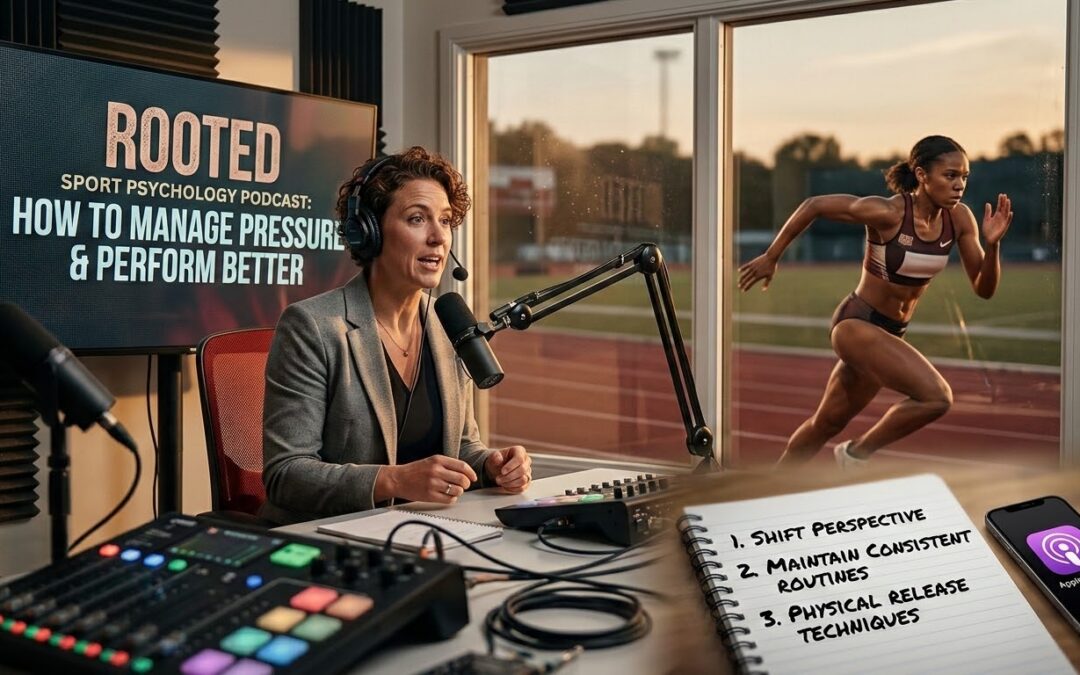
Pressure is an inevitable part of life—whether you’re an athlete facing a championship game, a performer stepping onto the stage, or simply navigating the daily challenges of work and relationships. But what separates those who thrive under pressure from those who crumble? In a recent episode of the Rooted Sport Psychology Podcast, host Georgia Miller dives deep into this question, offering actionable strategies to help you not just survive, but excel when the stakes are high.
Drawing from her experience as a mental performance coach, Georgia breaks down three core themes for managing pressure: shifting your perspective, maintaining consistent routines, and using physical release techniques. In this comprehensive guide, we’ll unpack each of these themes, providing detailed insights and practical advice to help you build a healthier, more productive relationship with pressure.
1. Find Perspective: Challenge vs. Threat
The Power of Mindset
The way you interpret pressure fundamentally shapes your response to it. Georgia emphasizes that the most powerful tool you have is your perspective. Are you viewing pressure as a threat to be avoided, or as a challenge to be embraced?
Threat Mindset
- Characteristics: Fear of mistakes, focus on potential failure, playing it safe, heightened anxiety.
- Consequences: You become risk-averse, your performance tightens, and you’re more likely to underperform.
- Example: In a tied basketball game with a minute left, a threat mindset leads to thoughts like, “I can’t mess up,” causing you to play cautiously and lose your natural rhythm.
Challenge Mindset
- Characteristics: Excitement, focus on opportunity, willingness to compete, confidence.
- Consequences: You play with energy and aggression, leveraging the same skills that got you to this moment.
- Example: In the same basketball scenario, a challenge mindset sounds like, “This is my chance to help my team win,” fueling proactive and confident play.
The Buffalo vs. Cow Analogy
Georgia uses a vivid analogy from nature:
- Cows run away from storms, scattering and prolonging their exposure to adversity.
- Buffaloes charge directly into the storm, facing it together and getting through it faster.
Ask yourself: Are you running from pressure like a cow, or facing it head-on like a buffalo?
Practical Steps to Shift Perspective
- Reframe Pressure as Privilege: Remind yourself that pressure means you’re in a meaningful moment. For example, a freshman starting as a college goalie might feel immense pressure, but it’s also a testament to their hard work and talent.
- Practice Gratitude: Instead of dreading high-stakes situations, appreciate them as opportunities to grow and showcase your abilities.
- Challenge Negative Self-Talk: Notice when your thoughts drift toward threat-based thinking and consciously redirect them toward challenge-based language.
Expert Insight: Our brains are wired to focus on negativity—there are thousands more negative words in the dictionary than positive ones. It takes deliberate practice to cultivate a challenge mindset, but it’s a skill that pays dividends in every area of life.
2. Keep Your Routines Consistent
Why Routines Matter
Under pressure, your environment feels unpredictable and your emotions run high. Routines act as an anchor, providing familiarity and stability when everything else feels chaotic.
The Danger of Abandoning Routine
- Common Mistake: In high-pressure moments, people often abandon their usual routines, overthink their actions, or try to “force” success.
- Example: A basketball player at the free-throw line in a tied game might rush their shot or focus obsessively on technique, disrupting their natural flow.
The Power of Consistency
- Maintain Normalcy: Stick to the same pre-game rituals, warm-ups, and in-game routines you use in practice or less stressful situations.
- Create a Comfort Zone: Your routine becomes a safe space, helping you feel grounded and in control, regardless of external pressure.
- Build Trust in Yourself: Consistency reinforces your confidence—you know what works for you, so trust it even when the stakes are high.
Actionable Advice for Building and Maintaining Routines
- Identify Your Key Rituals: What actions or habits help you feel prepared and focused? Write them down and make them non-negotiable.
- Practice Under Simulated Pressure: Rehearse your routines in practice settings that mimic high-pressure scenarios, so they become automatic.
- Resist the Urge to Change: When pressure mounts, remind yourself that your routine is your anchor—don’t let anxiety convince you to abandon it.
Expert Tip: The best athletes and performers treat every moment—big or small—with the same level of preparation and routine. This consistency is what allows them to deliver under pressure.
3. Use Physical Release Techniques
The Body’s Response to Pressure
Pressure doesn’t just affect your mind—it manifests physically as tension, shallow breathing, and discomfort. If left unchecked, this tension can sabotage your performance.
Why Physical Release Matters
- Breaks the Stress Cycle: Physical techniques help interrupt the body’s stress response, calming your nervous system.
- Restores Control: When you manage your body’s reactions, you regain a sense of agency over your performance.
Key Techniques to Try
1. Breathing Exercises
- Four-Four-Four Breathing: Inhale for four seconds, hold for four seconds, exhale for four seconds. Repeat several times.
- Benefits: Slows your heart rate, calms your mind, and brings your focus back to the present.
- When to Use: Before a big moment, during timeouts, or anytime you feel tension rising.
2. Progressive Muscle Relaxation
- How It Works: Systematically tense and then relax different muscle groups, starting from your toes and working up to your head.
- Benefits: Increases body awareness, releases built-up tension, and promotes relaxation.
- When to Use: As part of your pre-performance routine or during breaks in competition.
3. Quick Physical Resets
- Examples: Shaking out your hands, rolling your shoulders, or taking a few deep, intentional breaths.
- Benefits: Provides an immediate sense of release and helps reset your focus.
Integrating Physical Release into Your Routine
- Make It Habitual: Incorporate these techniques into your daily practice, not just during high-pressure moments.
- Combine with Mental Strategies: Use physical release alongside perspective shifts and routine maintenance for a holistic approach.
Expert Insight: The mind and body are deeply connected. When you calm your body, your mind follows—and vice versa.
Recap: Your Pressure-Management Toolkit
To perform your best under pressure, remember these three pillars:
- Find Perspective: Reframe pressure as a challenge and a privilege. Face it head-on like a buffalo, not a cow.
- Keep Your Routines: Stick to your familiar habits and rituals to create stability and comfort.
- Use Physical Release: Practice breathing exercises and muscle relaxation to release tension and maintain control.
These strategies aren’t just for athletes—they’re for anyone who wants to handle pressure more effectively, whether in sports, work, or everyday life.
Take the Next Step
Pressure isn’t going away, but your relationship with it can change. By applying these nuanced, research-backed strategies, you can transform pressure from a stumbling block into a stepping stone for peak performance.