
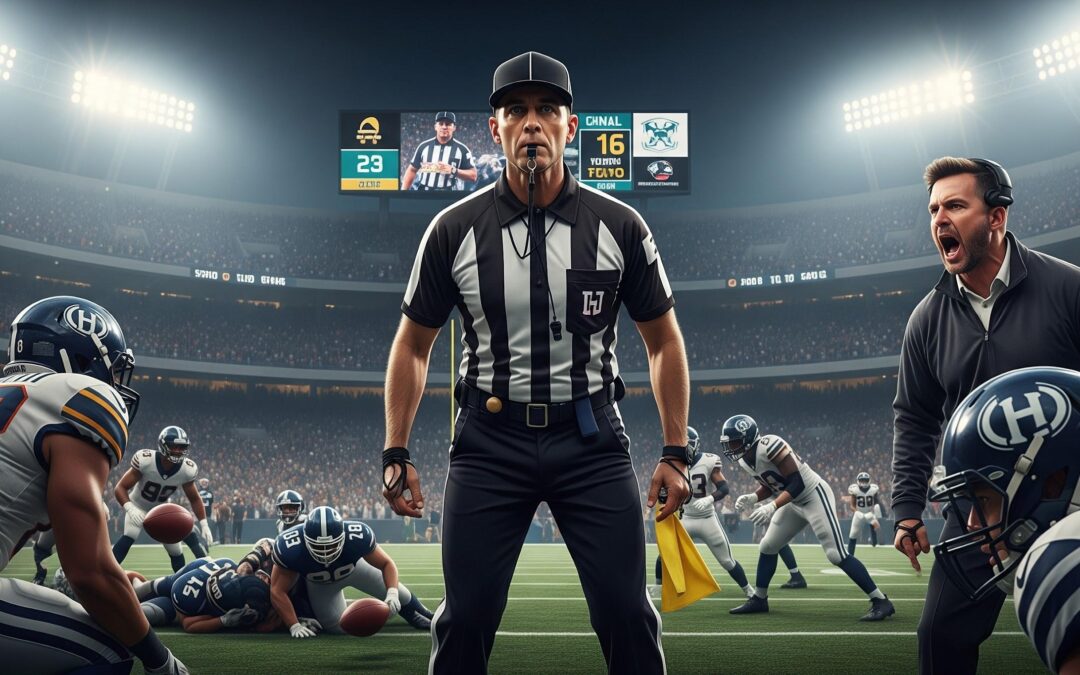
The Mental Game of Refereeing: Overcoming Challenges and Building Resilience
Listen to the full episode of the Rooted Sport Psychology Show for more insights and expert advice from Georgia Miller.
Introduction: The Unsung Heroes of Sports
When we think about the high-pressure world of collegiate and professional football, our minds often go to the athletes and coaches. But there’s a group whose performance is just as critical—yet rarely celebrated: the referees. In the latest episode of the Rooted Sport Psychology Show, host Georgia Miller shines a spotlight on the mental challenges and essential traits of sports officials. Drawing from her extensive experience working with referees across multiple sports, Georgia offers a deep dive into the unique pressures officials face and the mental skills that set the best apart.
This blog post unpacks the main themes and actionable tips from the episode, providing referees, coaches, and sports enthusiasts with a comprehensive guide to understanding and improving the mental side of officiating.
The Demanding Life of a Referee
Before delving into mental strategies, it’s crucial to appreciate the context in which referees operate:
- Dual Careers: Most referees juggle full-time jobs alongside their officiating duties. Unless retired, they must balance demanding work schedules with weekly game assignments.
- Travel Challenges: Unlike players and coaches who may travel by charter, referees typically fly commercial, often arriving a day early to avoid disruptions.
- Constant Evaluation: Referees undergo rigorous preparation—attending meetings, reviewing game film, and participating in scrimmages. Their performance is graded by a “grader,” adding another layer of scrutiny.
Key Insight: Refereeing is essentially a full-time commitment disguised as a part-time role, requiring immense dedication and mental fortitude.
The Three Core Mental Challenges for Referees
Georgia Miller identifies three primary mental hurdles that can undermine an official’s performance. Let’s break down each challenge and explore actionable strategies to overcome them.
1. Hesitation and Indecisiveness
The Challenge:
Sports move at lightning speed. Referees must make split-second decisions, but hesitation or second-guessing can lead to missed or delayed calls. This often stems from internal doubts—“Did I see that right?” or “Should I call this?”
Why It Matters:
- Hesitation disrupts the flow of the game.
- Indecisiveness erodes confidence, both for the referee and those relying on their judgment.
Actionable Advice:
- Trust Your Training: Rely on your preparation and instincts. If you see a violation, act decisively.
- Commit to the Call: Once you make a decision, stand by it. Overthinking in the moment is a recipe for error.
- Practice Decision-Making Drills: In training, simulate high-pressure scenarios to build confidence in your split-second judgments.
Expert Insight: Georgia emphasizes that the best referees “trust their eyes and instincts.” Overthinking is the enemy of effective officiating.
2. Worrying About What Others Think
The Challenge: Referees operate under the gaze of thousands—fans, coaches, players, and media. The fear of criticism or backlash can distract officials from their primary responsibility: ensuring a fair and safe game.
Why It Matters:
- External opinions can cloud judgment and feed into hesitation.
- Attempting to please everyone is impossible and adds unnecessary pressure.
Actionable Advice:
- Tune Out the Noise: Develop mental routines to block out external distractions. Focus on the game, not the crowd.
- Reframe Criticism: Accept that controversy is part of the job. Use feedback constructively, but don’t let it dictate your actions.
- Mindfulness Techniques: Practice mindfulness or meditation to stay present and centered during games.
Expert Insight: Georgia notes, “The best officials embrace the controversy that comes with their job. They stand firm in their decisions and focus on what they can control.”
3. Not Letting Go of Mistakes
The Challenge: Mistakes are inevitable, but dwelling on them can lead to tension, frustration, and a decline in performance for the remainder of the game.
Why It Matters:
- Holding onto errors distracts from the present moment.
- It can negatively impact the entire officiating crew and the flow of the game.
Actionable Advice:
- Develop a Reset Routine: After a mistake, use a physical or mental cue (e.g., deep breath, mantra) to reset and refocus.
- Stay Present: Concentrate on the next play, not the last one. The game moves forward—so should you.
- Self-Compassion: Remind yourself that perfection is unattainable. Learn from mistakes, but don’t let them define you.
Expert Insight:
Georgia advises, “Instead of focusing on avoiding mistakes, referees need to stay present and move on quickly.”
Positive Habits and Traits of Successful Referees
Despite the challenges, top referees cultivate habits and mindsets that help them thrive under pressure. Here are the key traits discussed in the episode:
Pre-Game Routines
Why They Matter: Routines help officials get into the right mental space, manage nerves, and build confidence.
Examples of Effective Routines:
- Visualization: Mentally rehearse the game, key scenarios, and successful calls.
- Music: Listen to calming or energizing music, depending on what helps you focus.
- Field Walks: Take a walk on the field to acclimate and visualize your positioning.
- Engagement: Build rapport with coaches and players to ease tension and foster respect.
Actionable Tip: Experiment with different routines to find what best prepares you mentally and physically for game time.
Mental Resilience
Key Qualities:
- Ownership: Take responsibility for your calls, good or bad.
- Selective Attention: Focus on what you can control—the next call, the next play.
- Emotional Regulation: Use techniques like deep breathing or positive self-talk to manage stress.
Actionable Tip: Regularly reflect on your mental performance and seek feedback from trusted colleagues or mentors.
Conclusion: Appreciating the Referee’s Role
Referees are performers in their own right, facing immense pressure and scrutiny with every game. By understanding the unique mental challenges they encounter—and the strategies they use to overcome them—we can foster greater respect and appreciation for their essential role in sports.