
Mastering the Mental Game of Tennis: Expert Strategies from the Rooted Sports Psychology Show
Listen to the full episode of the Rooted Sports Psychology Show here.
Tennis is often described as a game of inches, but those inches are as much mental as they are physical. In a recent episode of the Rooted Sports Psychology Show, host Georgia Miller and guest expert Austin Davids—an accomplished player and coach—delve deep into the psychological and technical nuances that define tennis performance. Their conversation offers a treasure trove of actionable advice for players, coaches, and parents seeking to build resilience, foster sportsmanship, and thrive under the unique pressures of the sport.
Below, we break down the episode’s most valuable insights, providing in-depth guidance and expert recommendations to help you elevate your tennis game from the inside out.
The Power of Tennis Community and Family
Key Insight: Tennis is more than a solo pursuit; it’s a community and, for many, a family tradition.
Austin’s Story:
Growing up in a tennis family in Topeka, Kansas, Austin Davids was immersed in the sport from age five. His father coached high school tennis, and his brother followed suit. This environment fostered not just skill, but a deep appreciation for the camaraderie and support that tennis communities offer.
Actionable Advice:
- Seek out tennis communities: Whether through clubs, school teams, or local leagues, surround yourself with people who share your passion.
- Value mentorship: Learn from coaches, older players, and family members who can offer guidance and encouragement.
- Give back: As you grow, look for ways to mentor younger players and contribute to the tennis ecosystem.
Singles vs. Doubles: Navigating the Mental Divide
Key Insight:
The mental game shifts dramatically between singles and doubles play.
Expert Breakdown:
- Doubles:
- Players often perform better due to shared pressure and mutual support.
- Communication and encouragement between points are vital.
- Rituals like “meet at the T” (partners meeting at the center of the court after each point) foster connection and help reset mentally.
- Singles:
- Players are more prone to internalizing mistakes and negative thoughts.
- The absence of a partner means self-talk and self-regulation become crucial.
Actionable Advice:
- For Doubles Players:
- Establish a between-points routine (e.g., “meet at the T”) to maintain connection and positivity.
- Use encouraging language, even after lost points.
- For Singles Players:
- Develop self-talk scripts to counteract negative thoughts.
- Practice quick mental resets to avoid dwelling on mistakes.
Routines and Mental Resets: Your Secret Weapon
Key Insight: Consistent routines between points are essential for managing pressure and maintaining focus.
Expert Recommendations:
- Serving Routine: Austin’s example: Bounce the ball three times, take a deep breath, then serve. This anchors the mind and body, especially under stress.
- Physical Reset: Georgia’s example: Walk to the back fence and touch it between points to clear the mind.
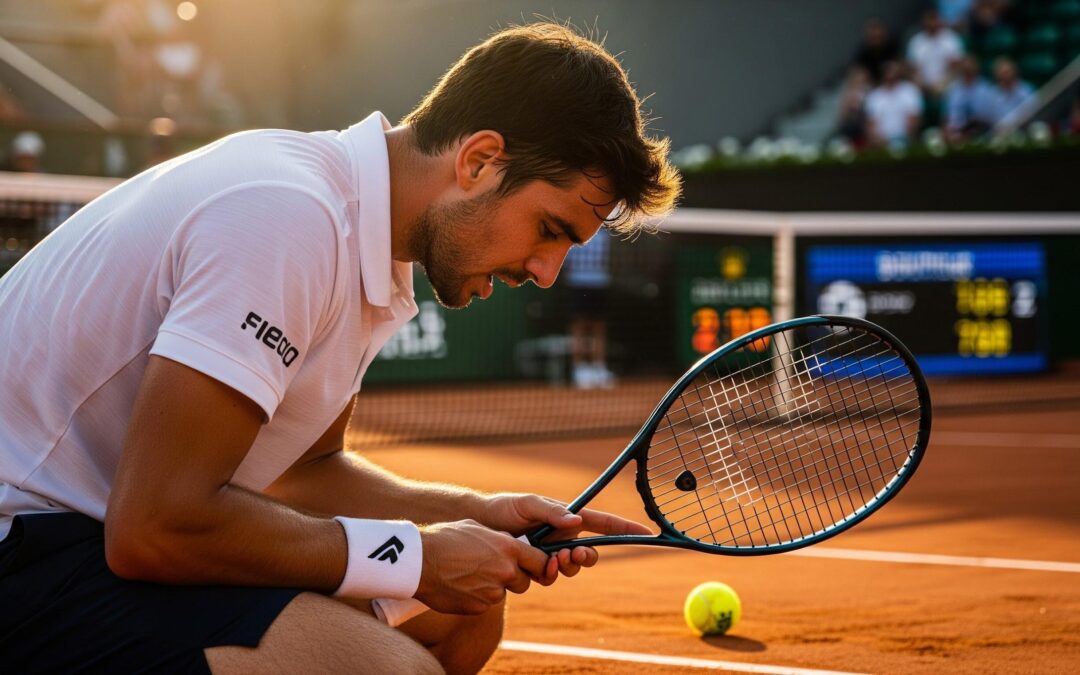
- Equipment Adjustment: Straightening racquet strings between points can serve as a tactile, controllable action to shift focus away from frustration.
Actionable Advice:
- Create a personalized routine: Experiment with different actions (breathing, bouncing, walking) to find what calms and centers you.
- Practice your routine in training: Make it automatic so it’s reliable under pressure.
- Use equipment as a reset tool: Adjust your strings, towel off, or re-grip your racquet to signal a mental reset.
Understanding Tennis Scoring and Embracing Failure
Key Insight:
Tennis scoring is unique—every point is equally important, and losing is inevitable, even for the best.
Expert Insights:
- Statistical Reality: Even Roger Federer won just over half his career points. Losing points is part of the game, not a sign of failure.
- No Game Clock: Players are never truly out of a match, which demands constant mental engagement and resilience.
Actionable Advice:
- Normalize losing: Accept that you will lose points and games. Focus on the next point, not the last mistake.
- Develop bounce-back strategies: Use routines and positive self-talk to reset after setbacks.
- Stay present: Avoid projecting ahead or dwelling on the past—play one point at a time.
Coaching Presence: Supporting Players During Matches
Key Insight: Coaches play a pivotal role during changeovers and critical moments, but their presence is often limited.
Expert Recommendations:
- Maximize changeovers: Use these moments to provide strategic advice, encouragement, and confidence boosts.
- Offer an outside perspective: Help players see tactical adjustments they might miss in the heat of play.
- Remind players of the big picture: Losing a few points or games doesn’t end the match—focus on finishing strong.
Actionable Advice for Coaches:
- Be proactive: Don’t wait for players to ask for help—offer support when you see them struggling.
- Foster independence: Teach players to self-assess and problem-solve, preparing them for matches where coaching isn’t allowed.
Self-Advocacy and Mental Autonomy on Court
Key Insight: Tennis players must learn to self-coach and adapt without constant external input.
Expert Strategies:
- Reflective Questions: Encourage players to ask themselves:
- What’s working?
- What needs adjustment?
- How can I respond if my opponent changes tactics?
- Mental Autonomy: Cultivate the ability to recognize situations and make decisions independently.
Actionable Advice:
- Practice self-assessment: After each match or practice, review what went well and what could improve.
- Role-play scenarios: Simulate matches without coaching to build self-reliance.
Managing Rankings and Pressure: The UTR Dilemma
Key Insight:
The Universal Tennis Rating (UTR) system can create unhealthy pressure and distract from performance.
Expert Insights:
- Ranking Anxiety: Players often fixate on their own and opponents’ UTR, leading to stress and fear of upsets.
- Participation Impact: The focus on UTR points has led some players to skip high school tennis, missing out on valuable team experiences.
Actionable Advice:
- Avoid bracket obsession: Don’t look at seedings or rankings before matches—focus on your own game.
- Play for the process, not the number: Concentrate on effort and improvement, not just outcomes.
- Advocate for high school tennis: Encourage participation for the camaraderie and growth it offers, regardless of UTR implications.
Sportsmanship and Self-Officiating: Building Integrity
Key Insight: With limited officiating at many levels, players must uphold honesty and sportsmanship.
Expert Recommendations:
- Set clear expectations: Coaches should communicate a zero-tolerance policy for cheating to players and parents.
- Handle disputes calmly: If you disagree with a call, ask “Are you sure?” and involve a coach or official if needed.
- Be the bigger person: Respond to anger or unfairness with composure, not escalation.
Actionable Advice:
- Control what you can: Focus on your own calls and effort, not your opponent’s behavior.
- Model integrity: Make honest calls, even if it costs you a point.
- Educate parents: Involve them in preseason meetings to reinforce the culture of sportsmanship.
Final Takeaways: Effort, Process, and Growth
Key Insight: Effort and process matter more than outcome. Give what you can, every time.
Expert Wisdom:
- Austin’s Quote: “It’s impossible to give everything but give what you can.”
- Georgia’s Emphasis: Lead with your process and let the outcomes follow.